| 1 | Indicator Name | Fertility rate, total (births per woman) |
| 2 | Long definition | Total fertility rate represents the number of children that would be born to a woman if she were to live to the end of her childbearing years and bear children in accordance with age-specific fertility rates of the specified year. |
| 3 | Source | World Population Prospects, United Nations (UN), publisher: UN Population Division; Statistical databases and publications from national statistical offices, National statistical offices; Demographic Statistics, Eurostat (ESTAT) |
| 4 | Topic | Health: Reproductive health |
| 5 | Periodicity | Annual |
| 6 | Reference period | 1960-2024 |
| 7 | Statistical concept and methodology | Methodology: Total fertility rate is the sum of the age-specific fertility rates (multiplied by five, if the age-specific fertility rates are for 5-year age groups). Statistical concept(s): Total fertility rates are based on data on registered live births from vital registration systems or, in the absence of such systems, from censuses or sample surveys. The estimated rates are generally considered reliable measures of fertility in the recent past. Where no empirical information on age-specific fertility rates is available, a model is used to estimate the share of births to adolescents. For countries without reliable vital registration systems fertility rates are generally based on extrapolations from trends observed in censuses or surveys from earlier years. |
| 8 | Development relevance | Reproductive health is a state of physical and mental well-being in relation to the reproductive system and its functions and processes. Means of achieving reproductive health include education and services during pregnancy and childbirth, safe and effective contraception, and prevention and treatment of sexually transmitted diseases. Complications of pregnancy and childbirth are the leading cause of death and disability among women of reproductive age in developing countries. |
合計特殊出生率の国際比較
1 関連ポスト
2024年の各国の合計特殊出生率を比較しますと、最高値はチャドの6.028。次いでソマリアの6.013。同出生率上位にはアフリカ諸国がズラリです。最低出生率はマカオの0.582。次いで韓国の0.748、香港の0.841。なお、日本は1.150、そしてウクライナは0.988。様々に異なる制度や慣習がありながらも、各国共… https://t.co/m5sow4PcED pic.twitter.com/3yTgi4qGL8
— 三竹 道雄/MITAKE Michio (@amc_corporation) May 3, 2026
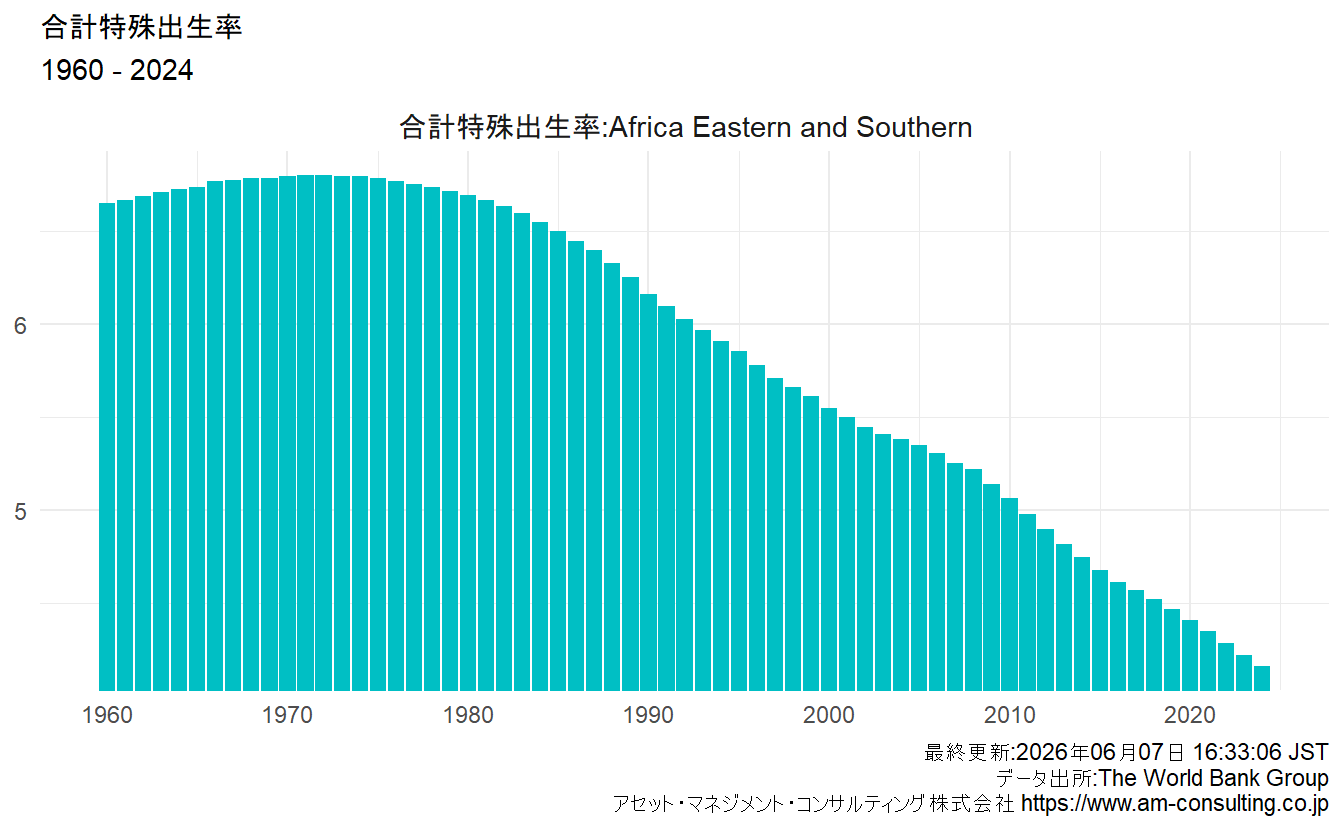
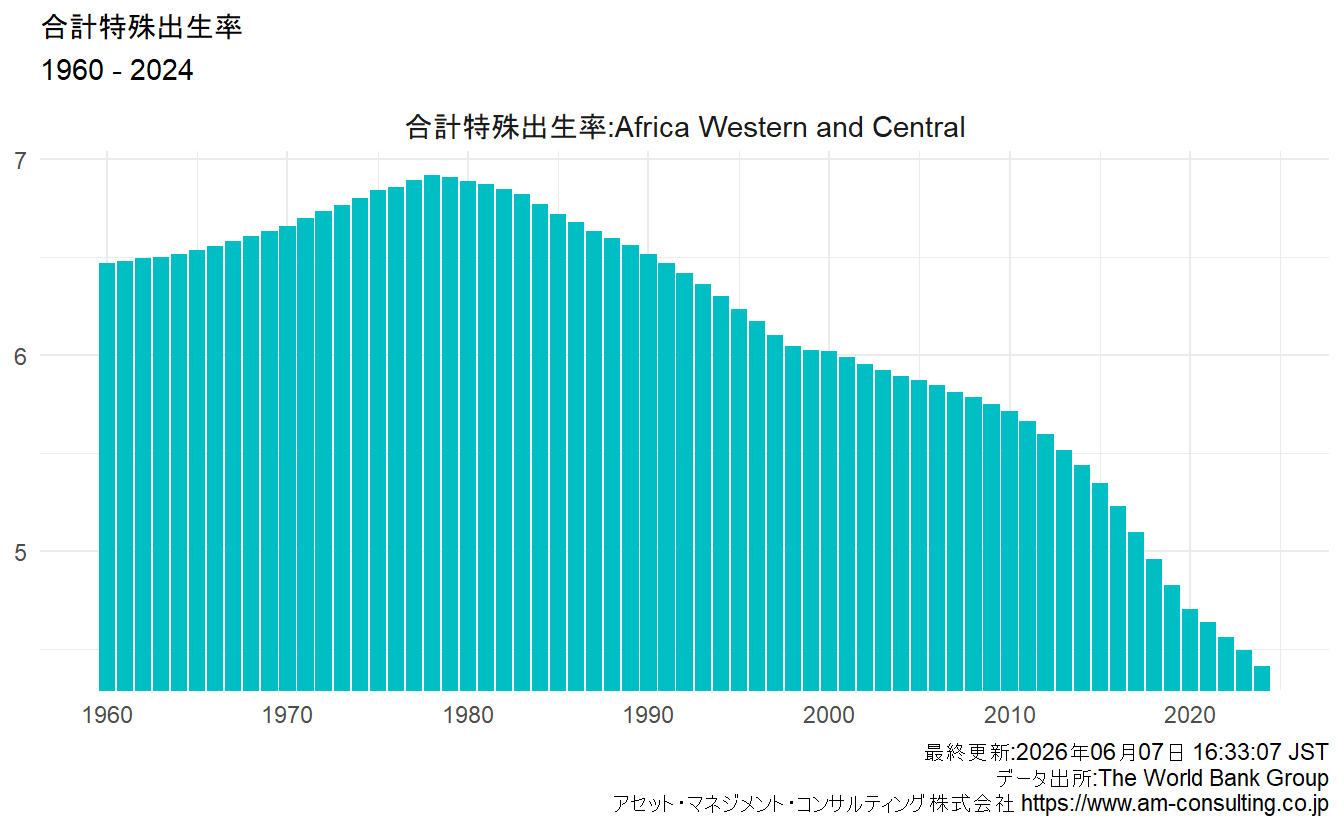
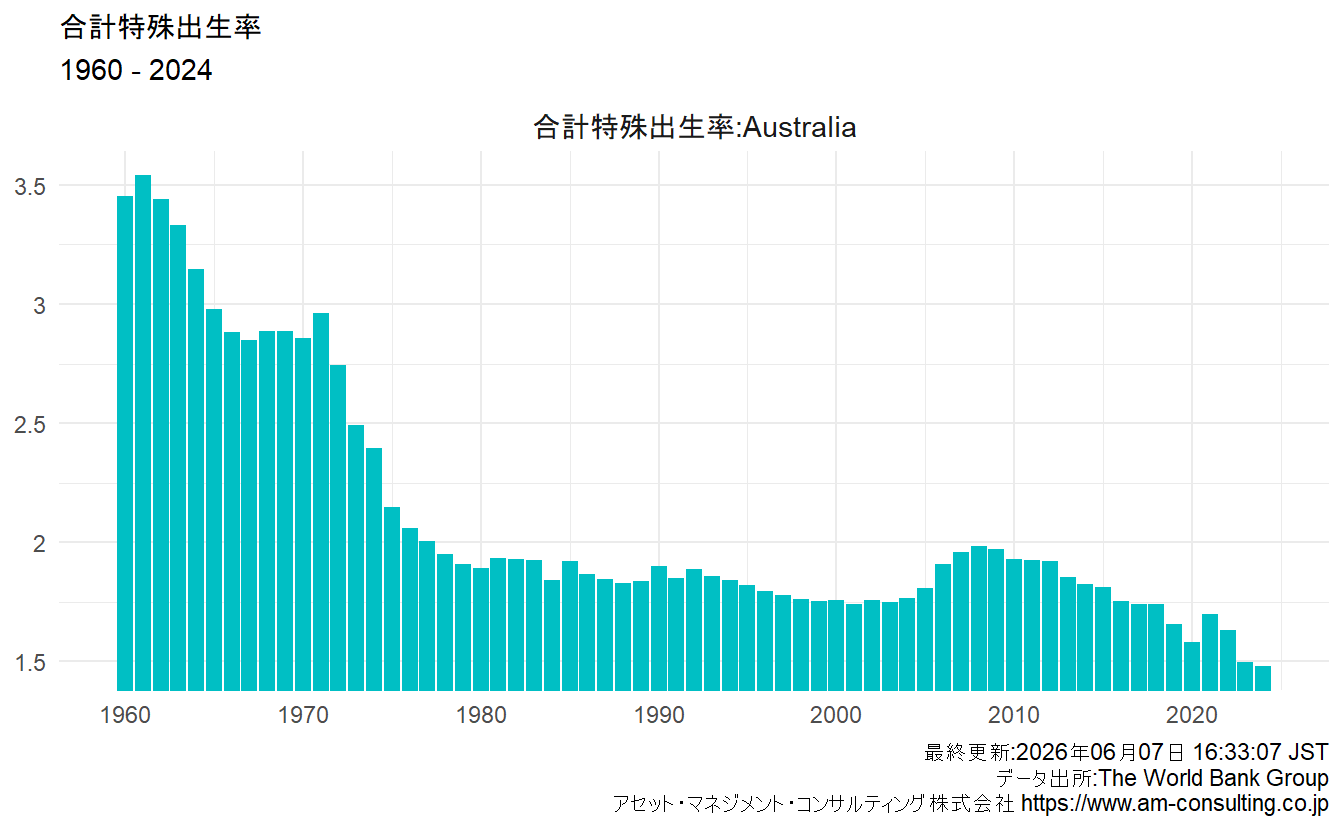
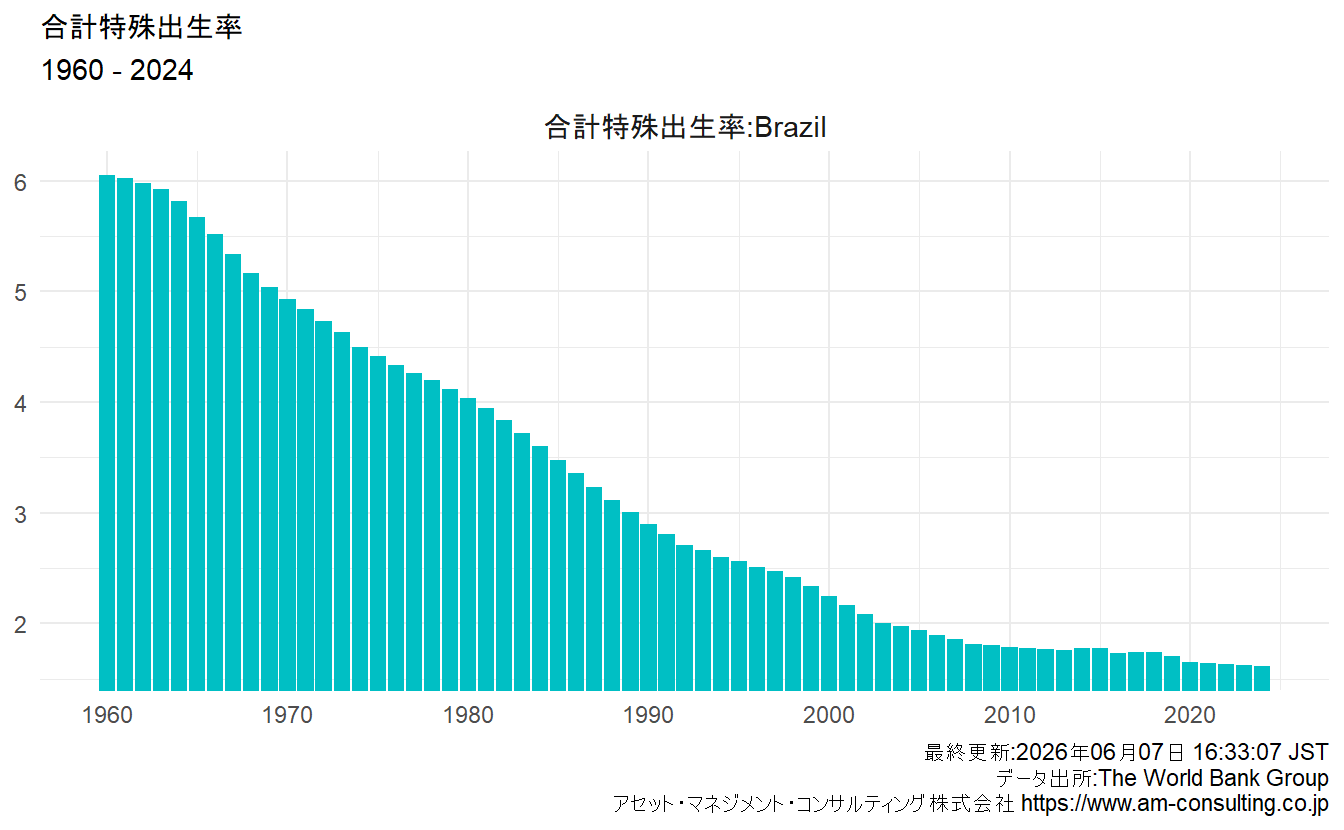
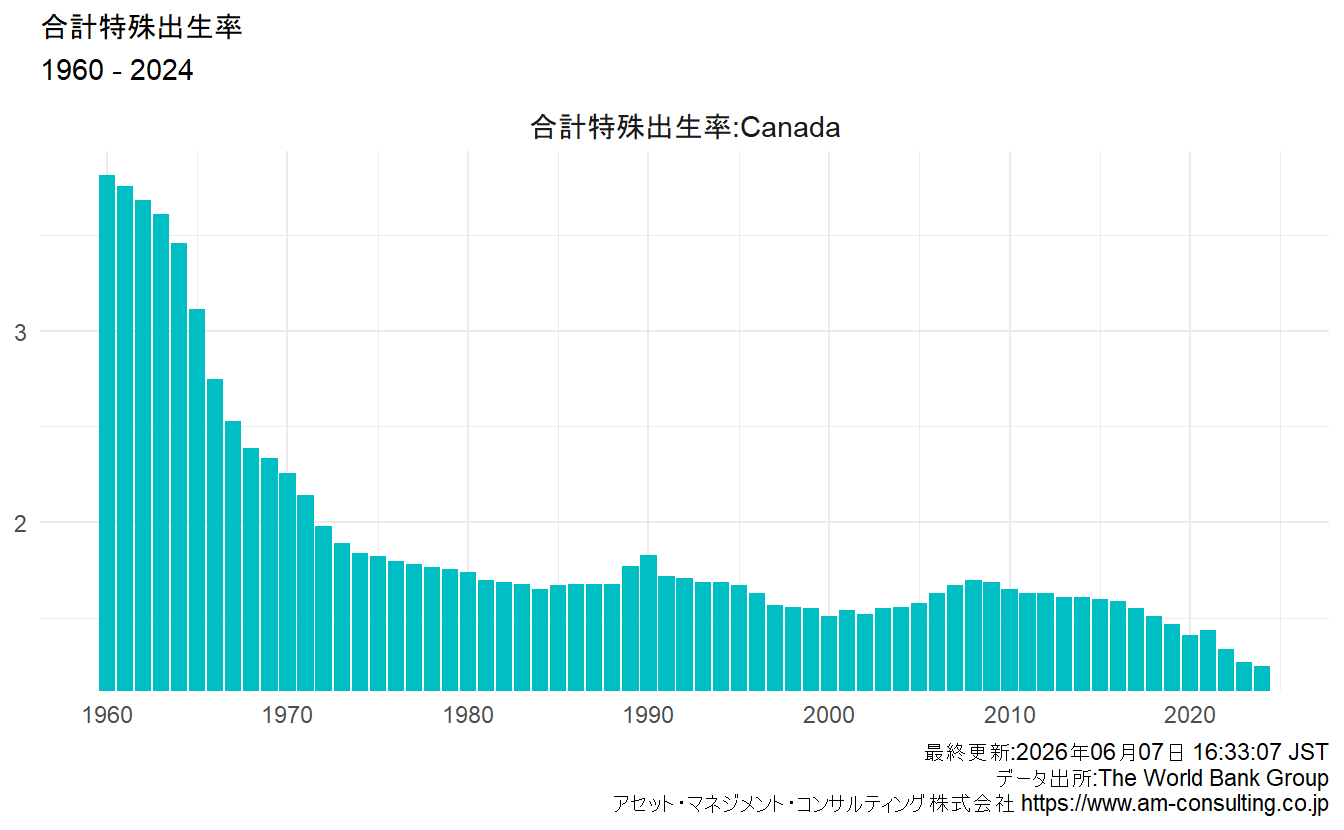
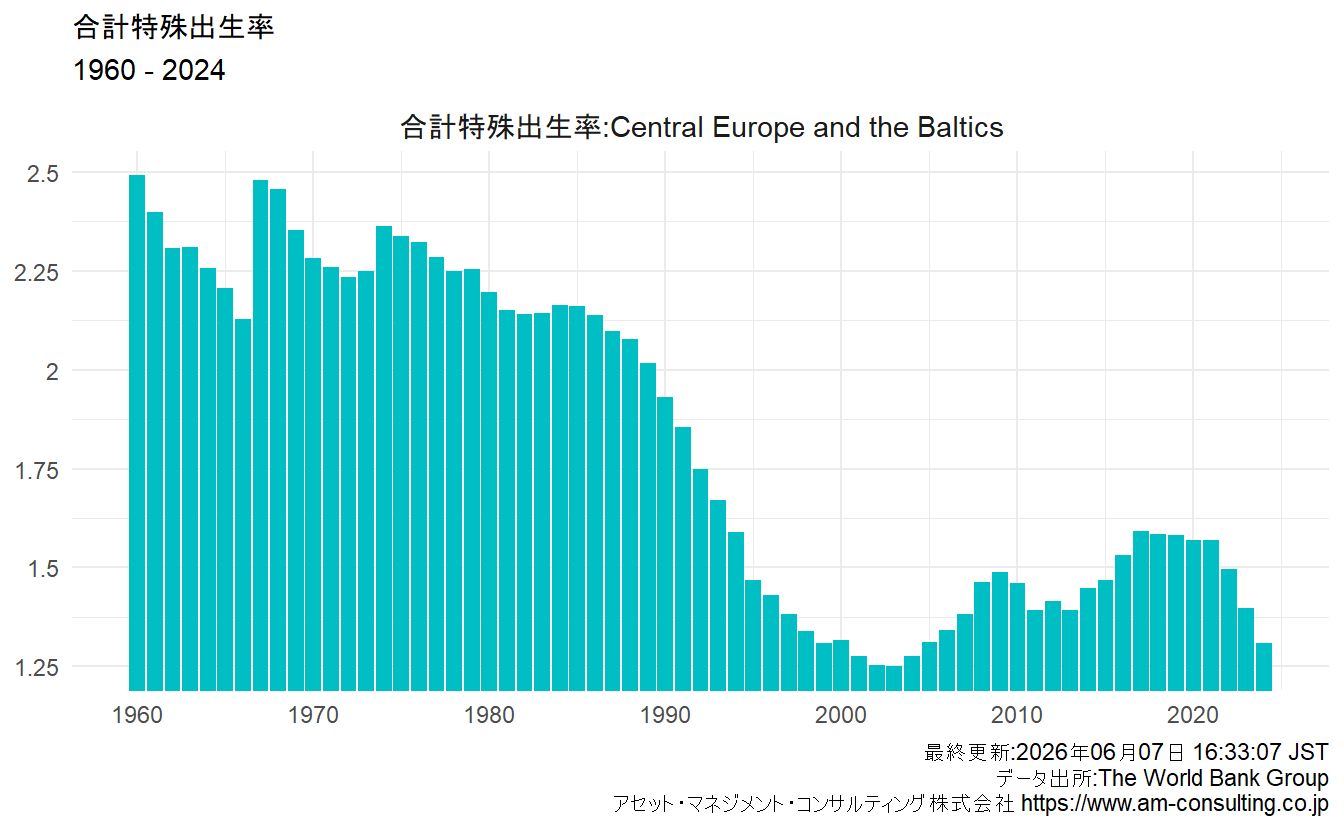
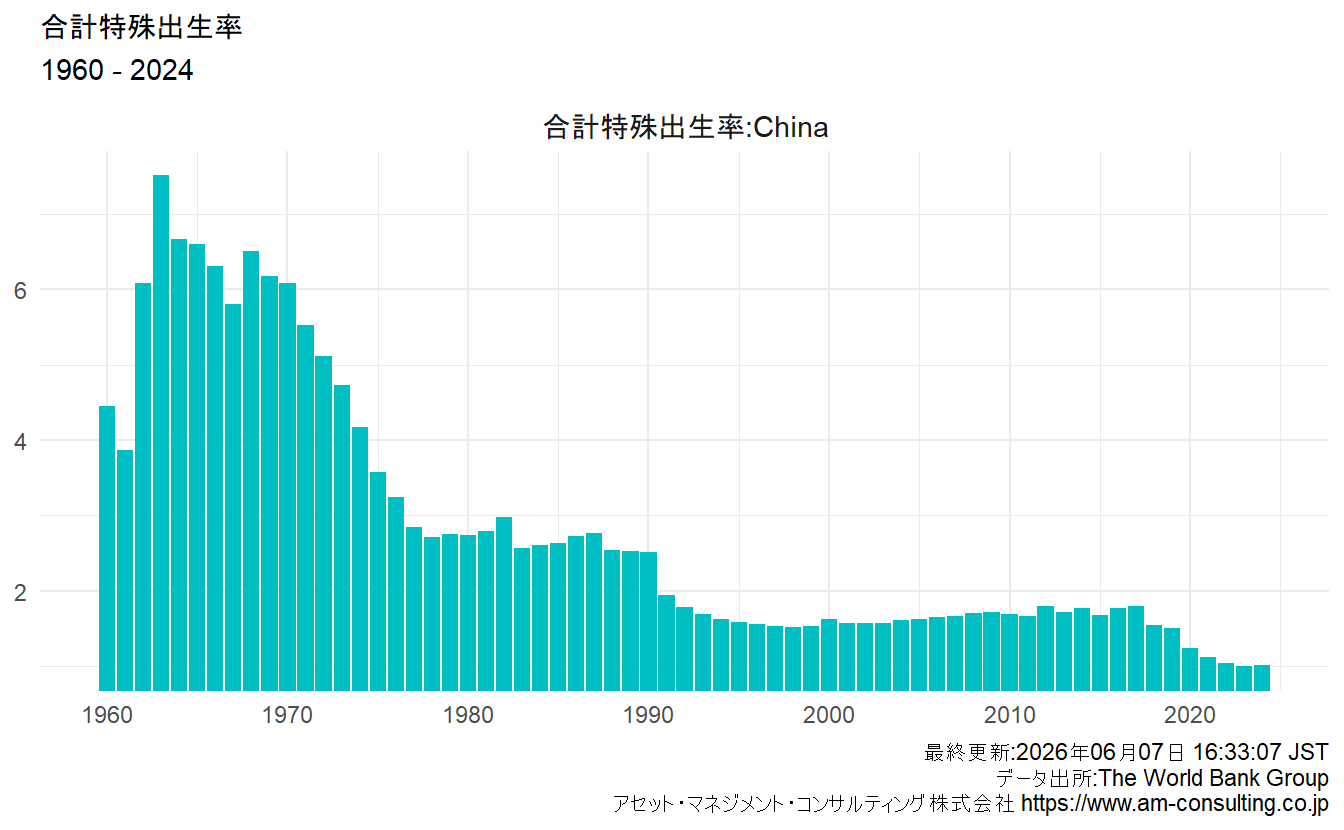
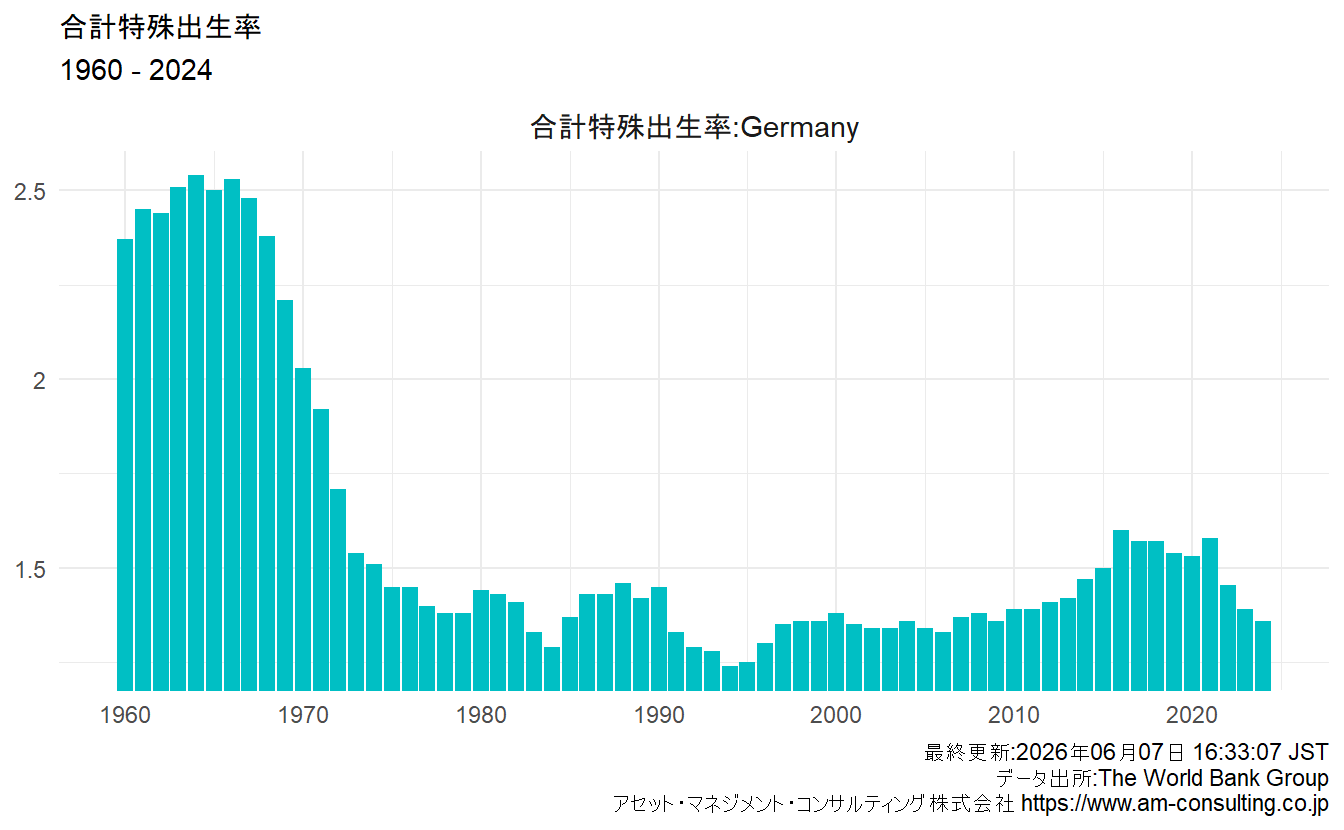
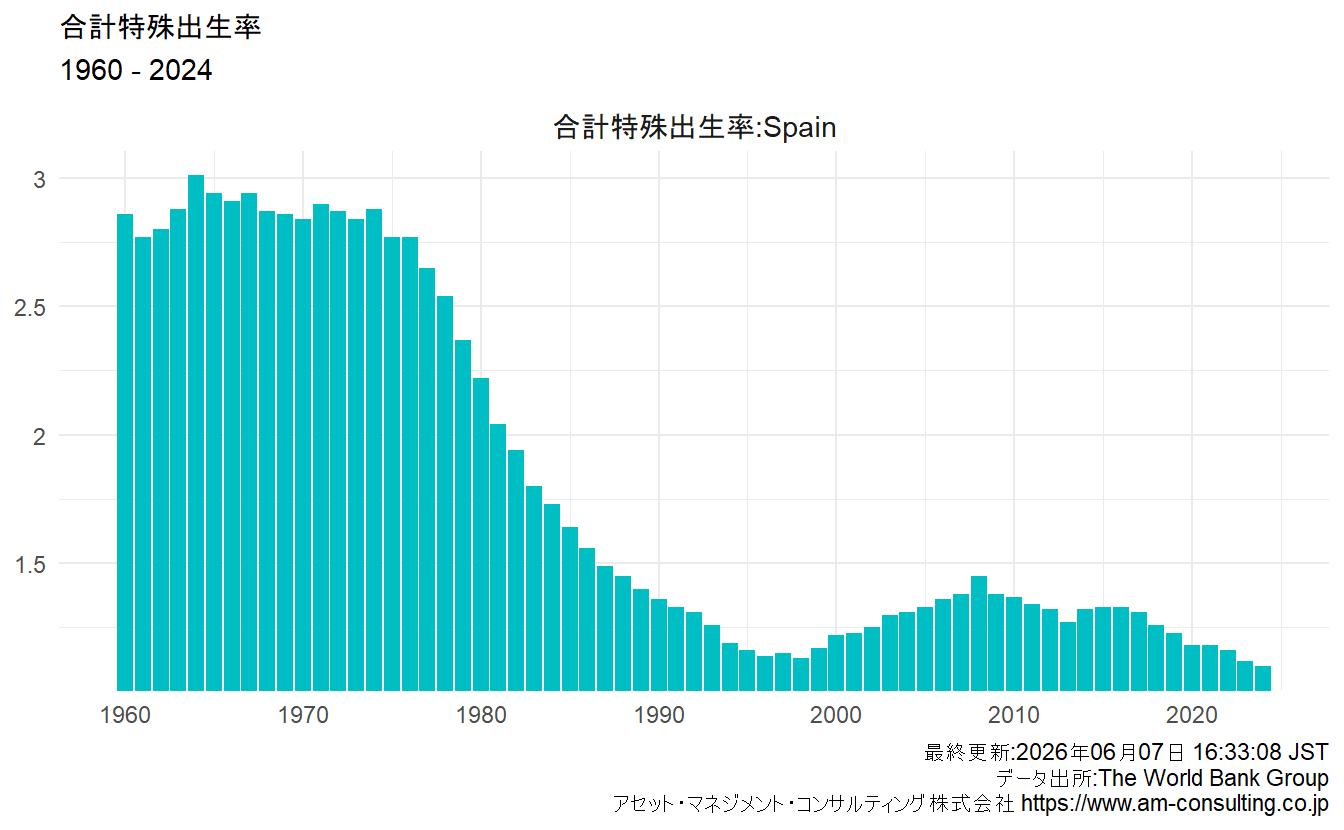
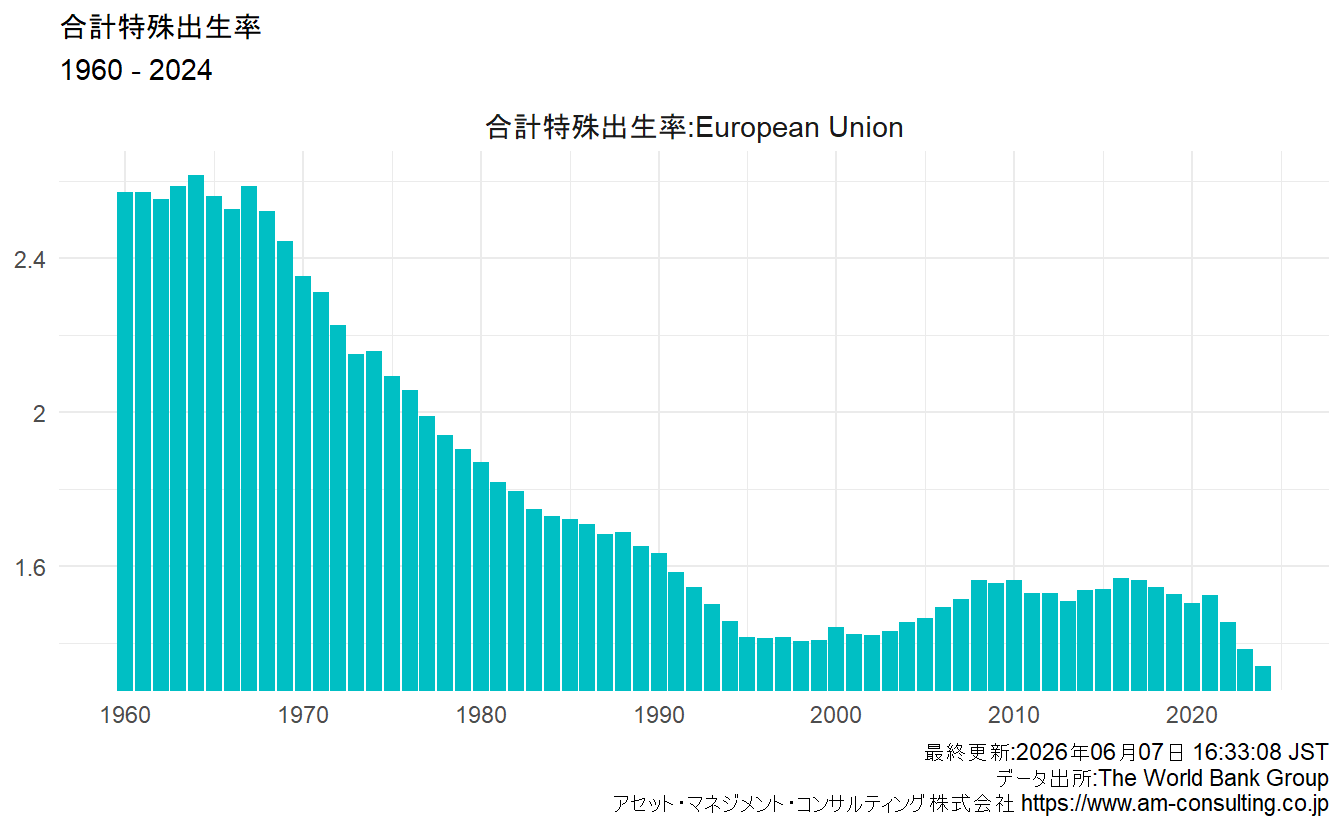
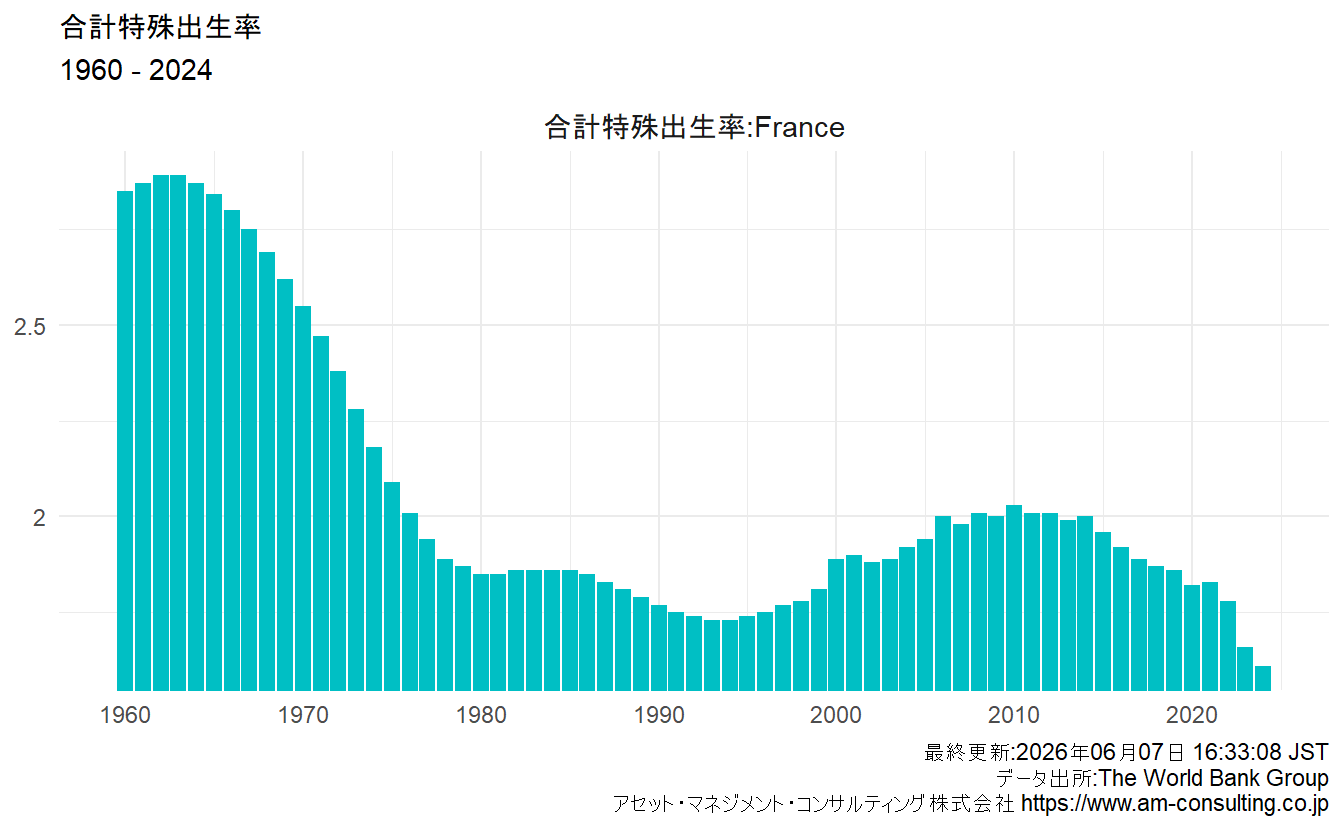
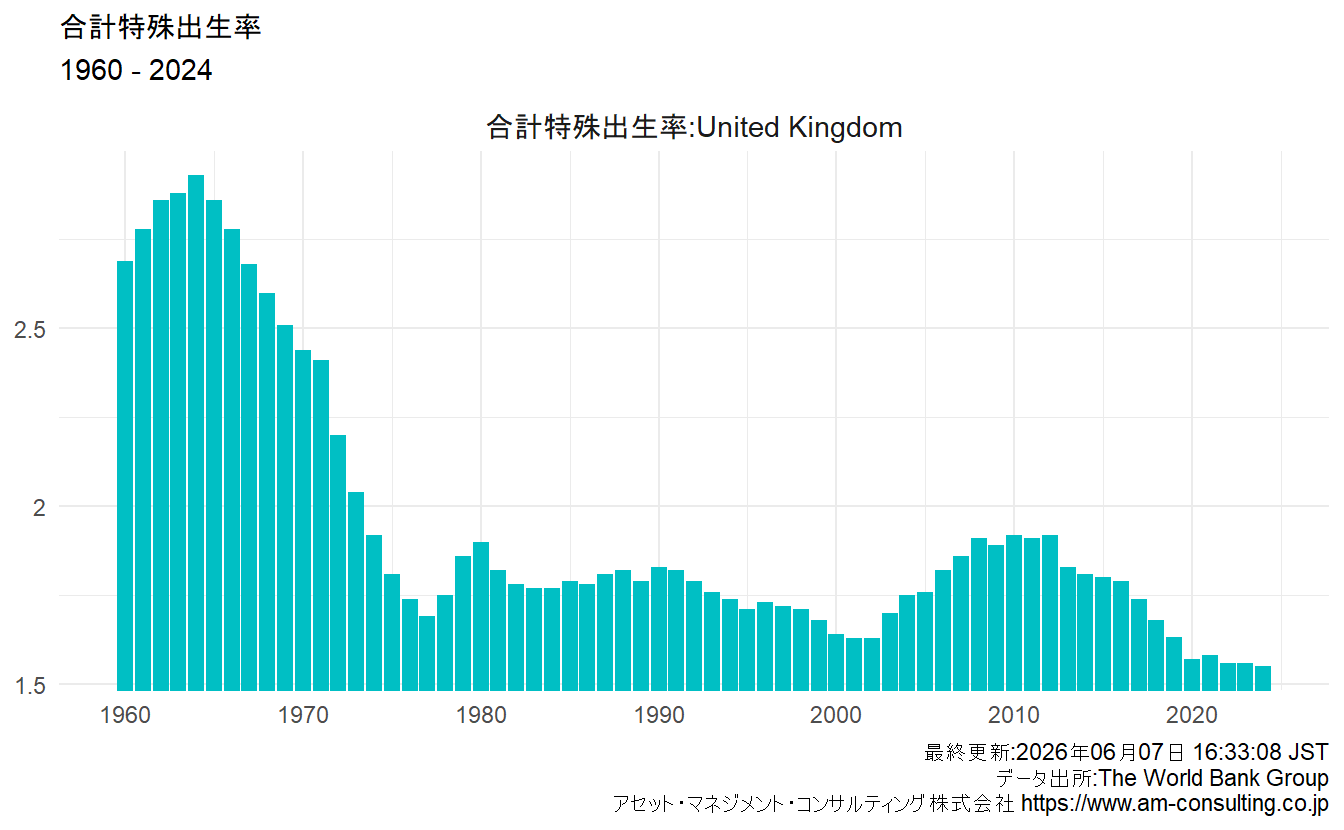
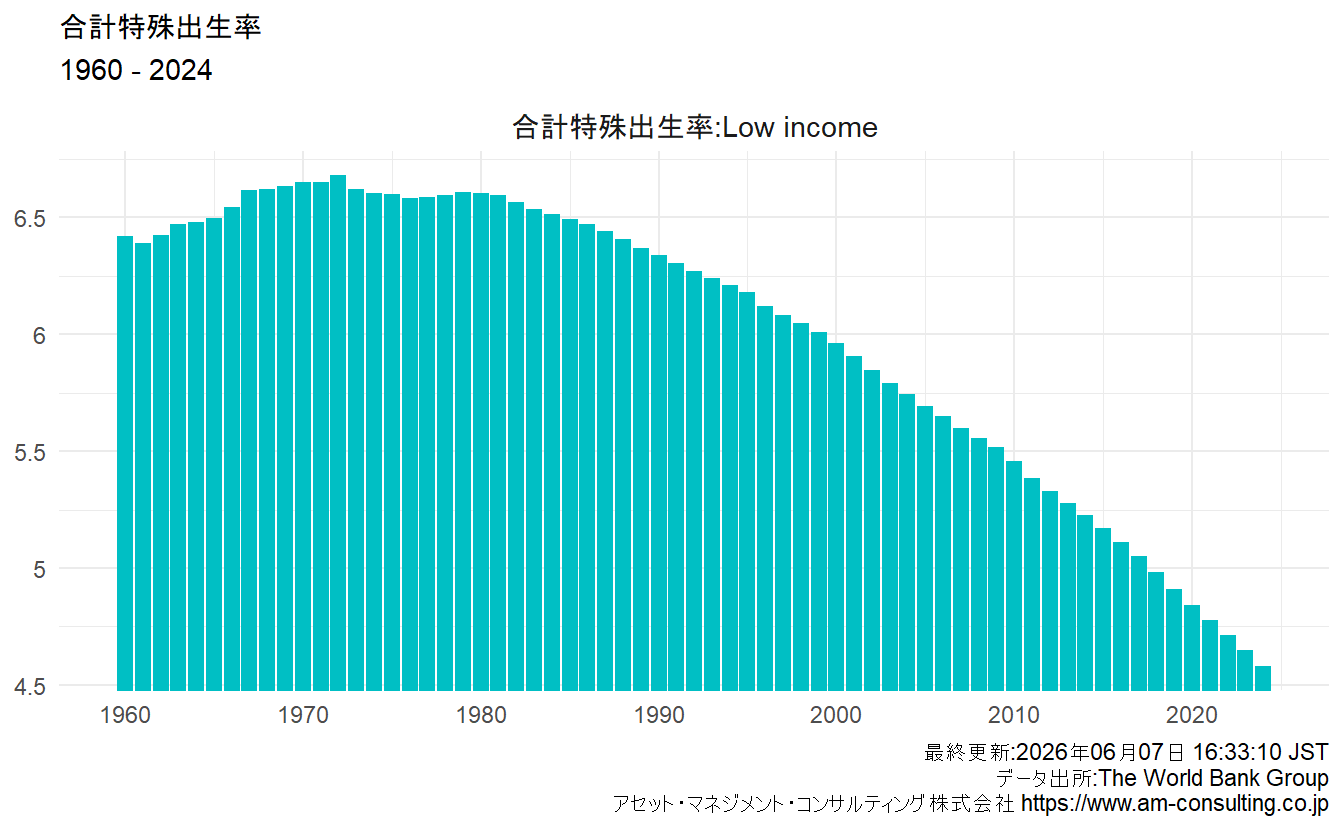
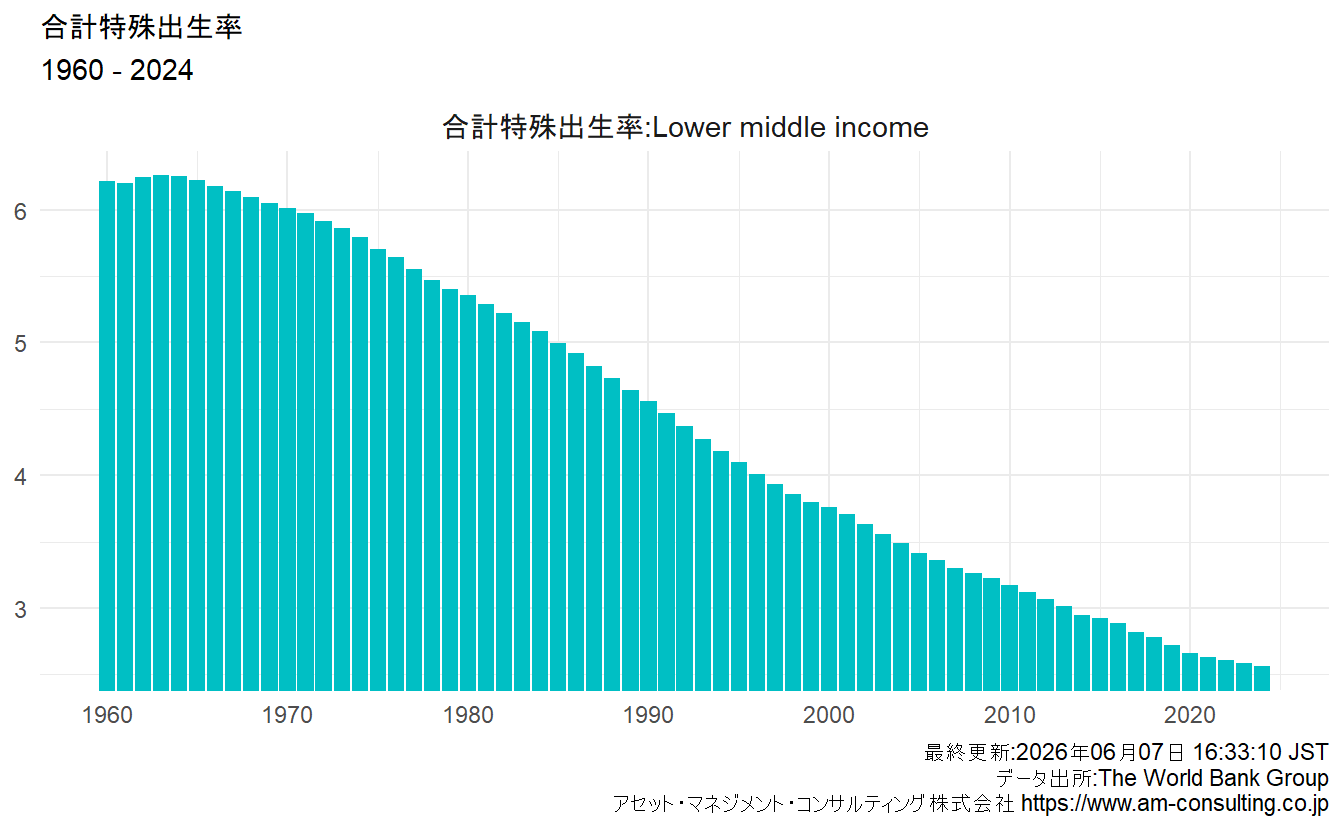
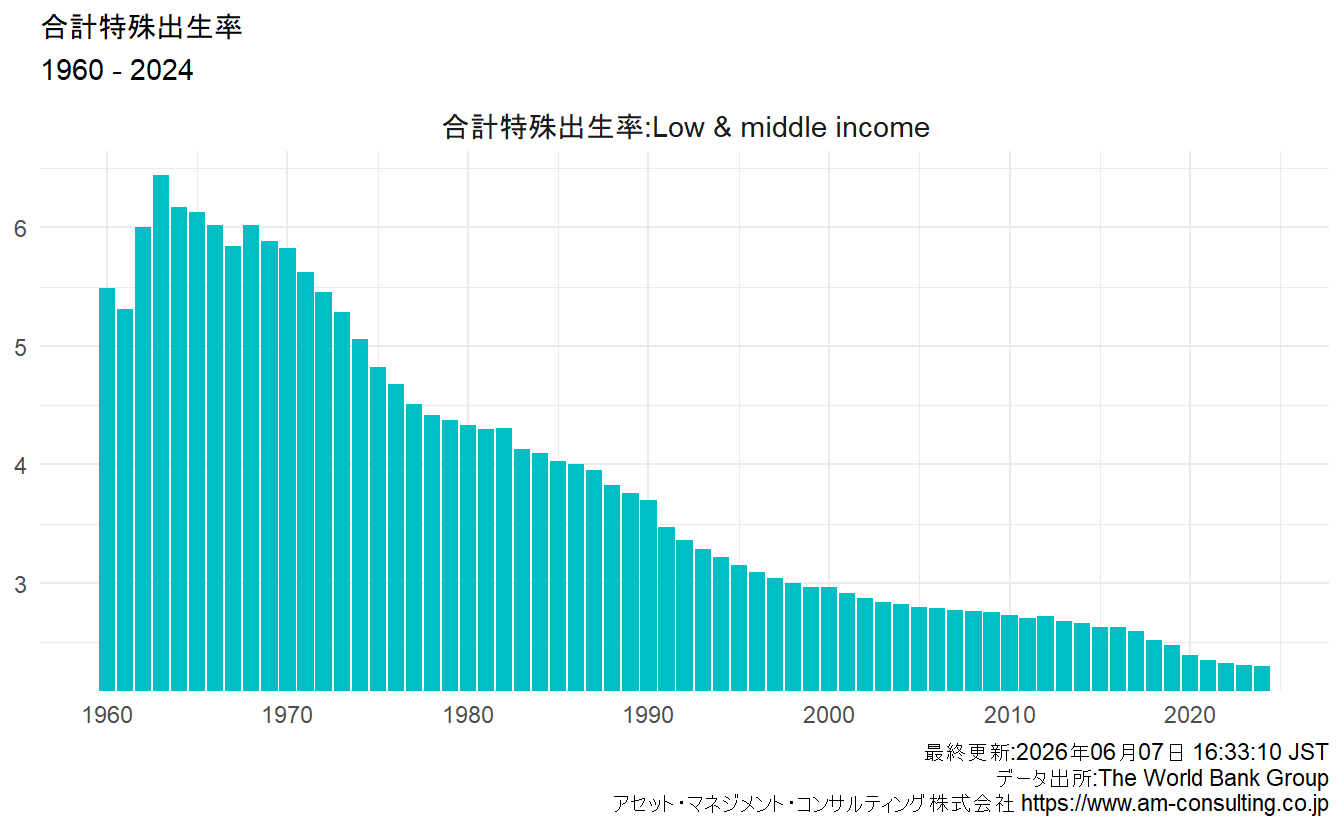
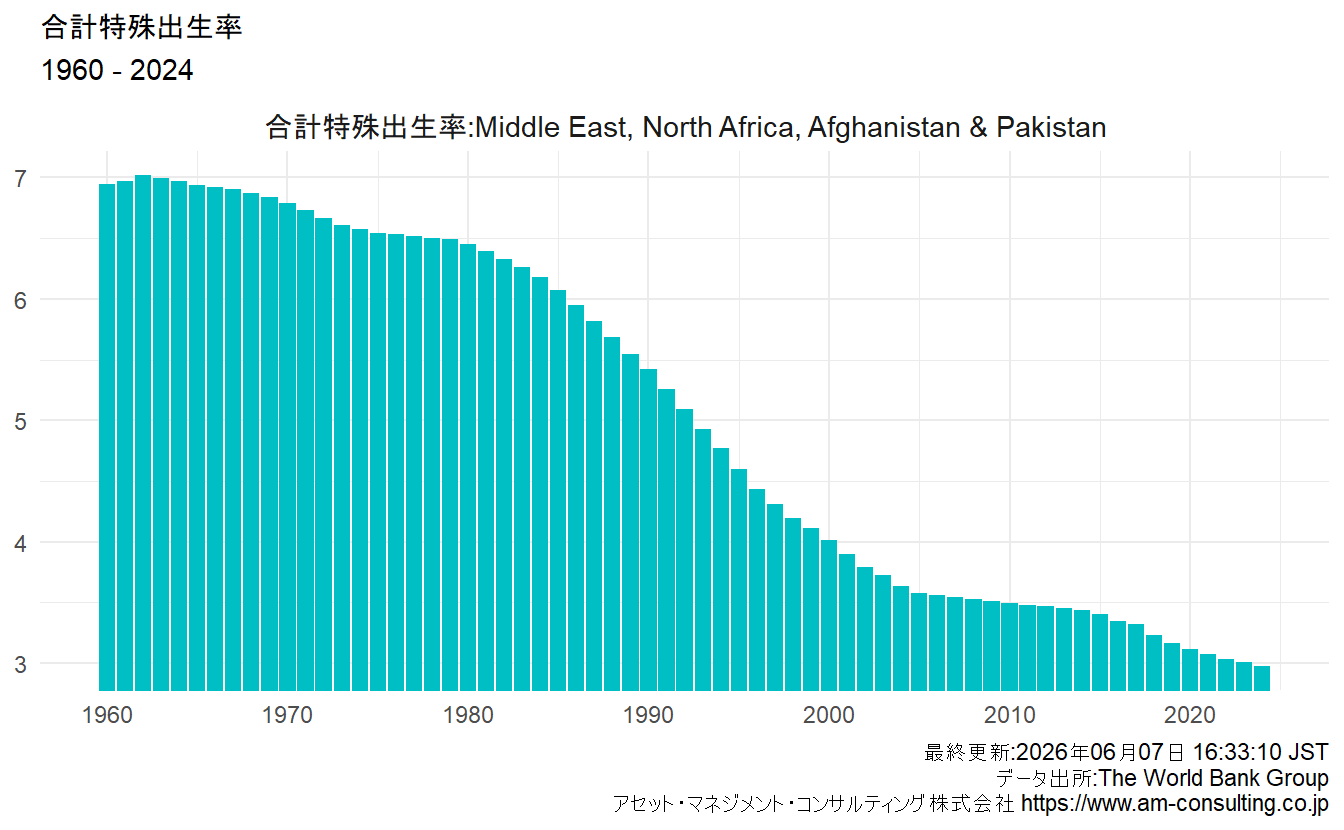
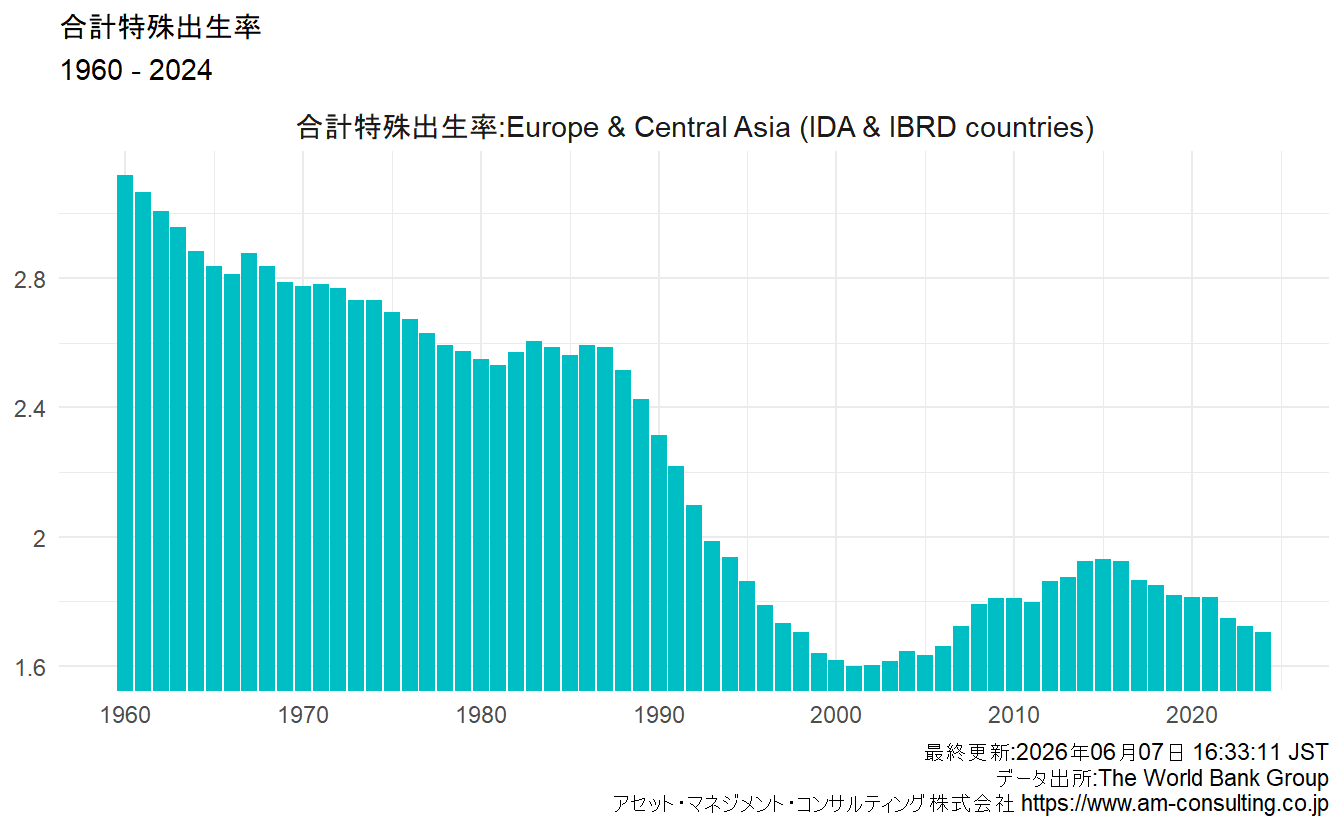
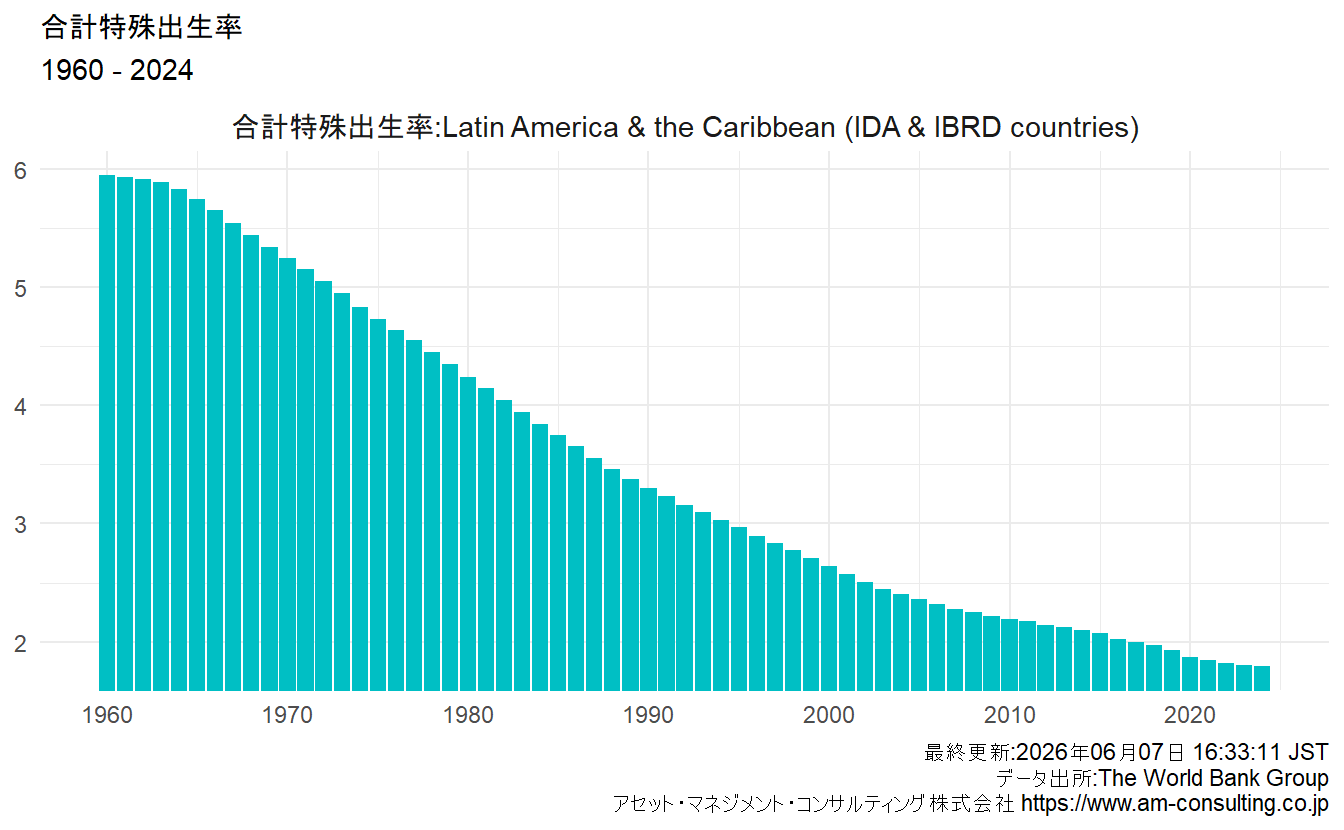
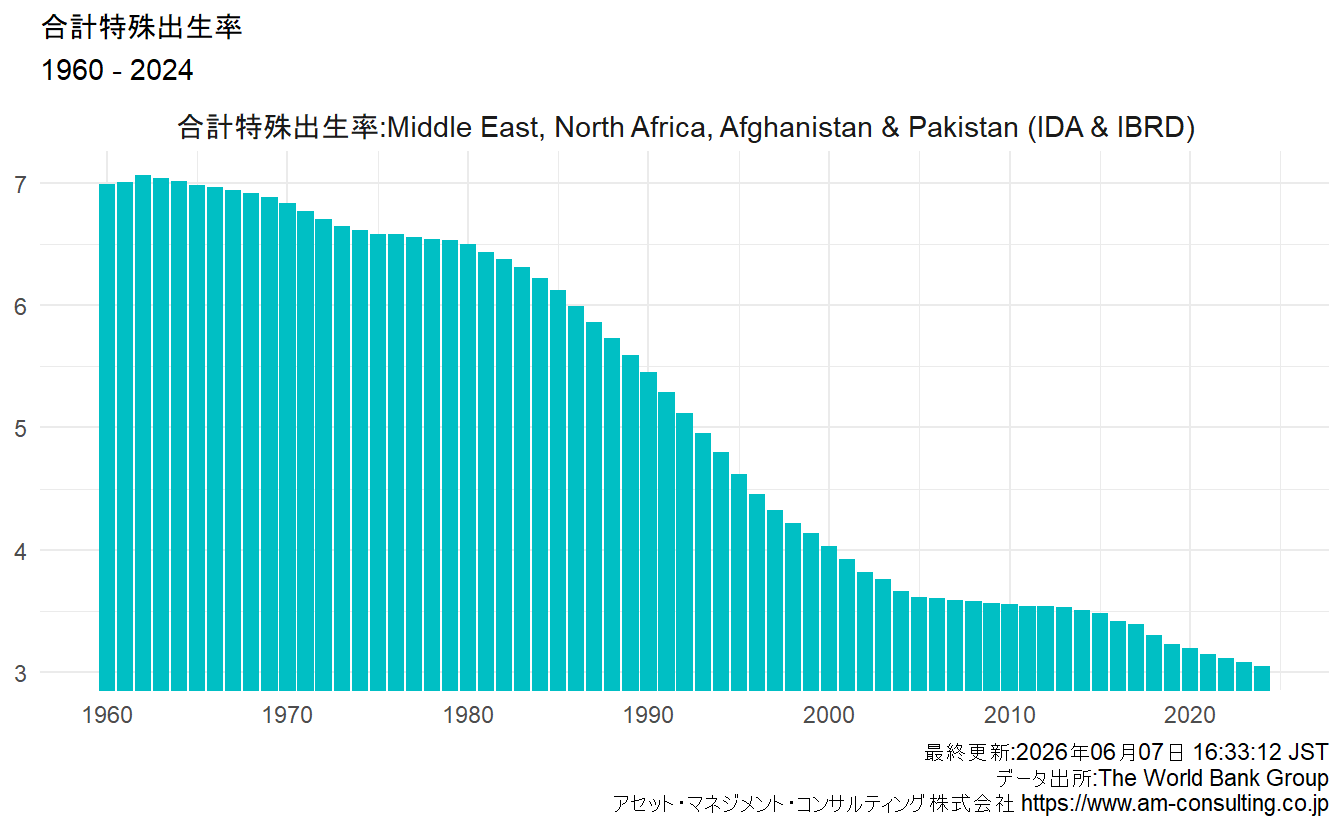
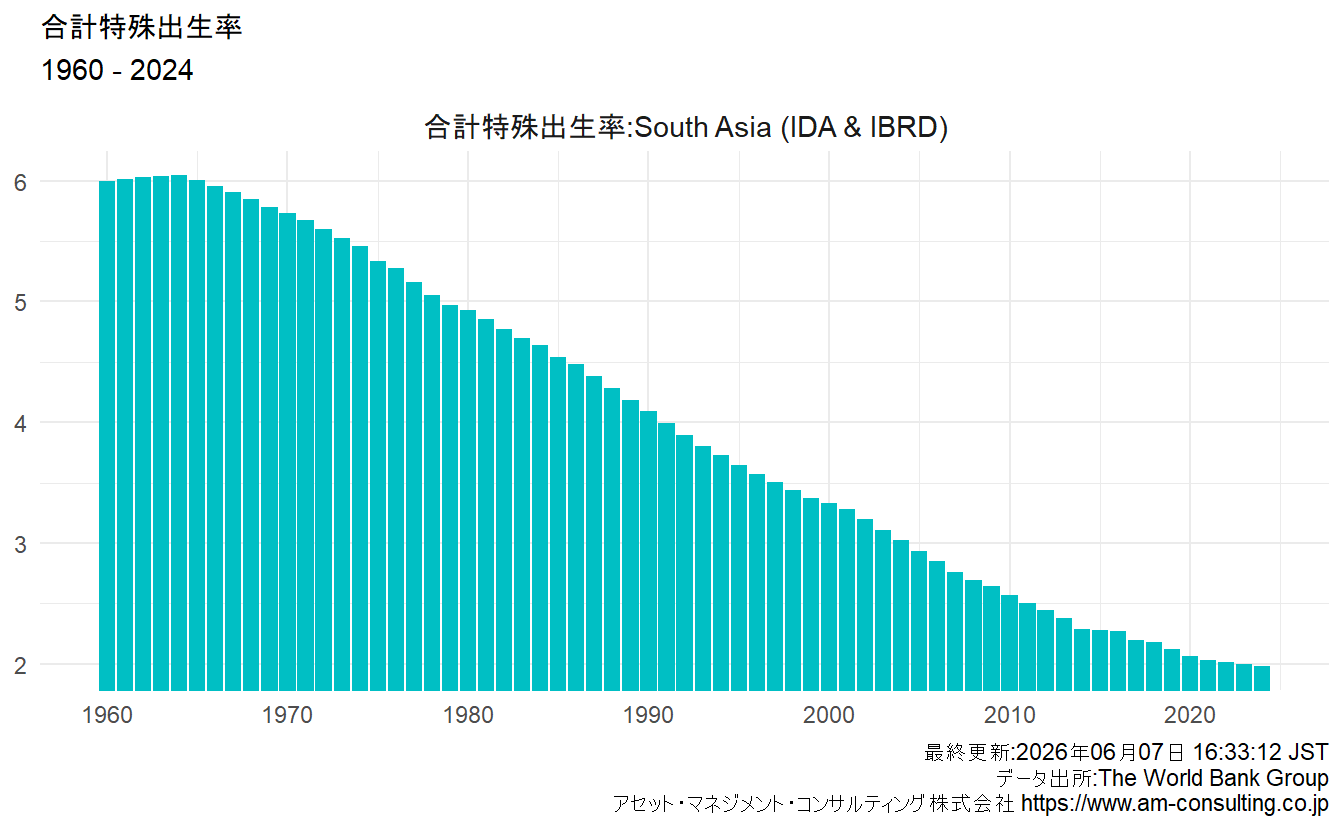
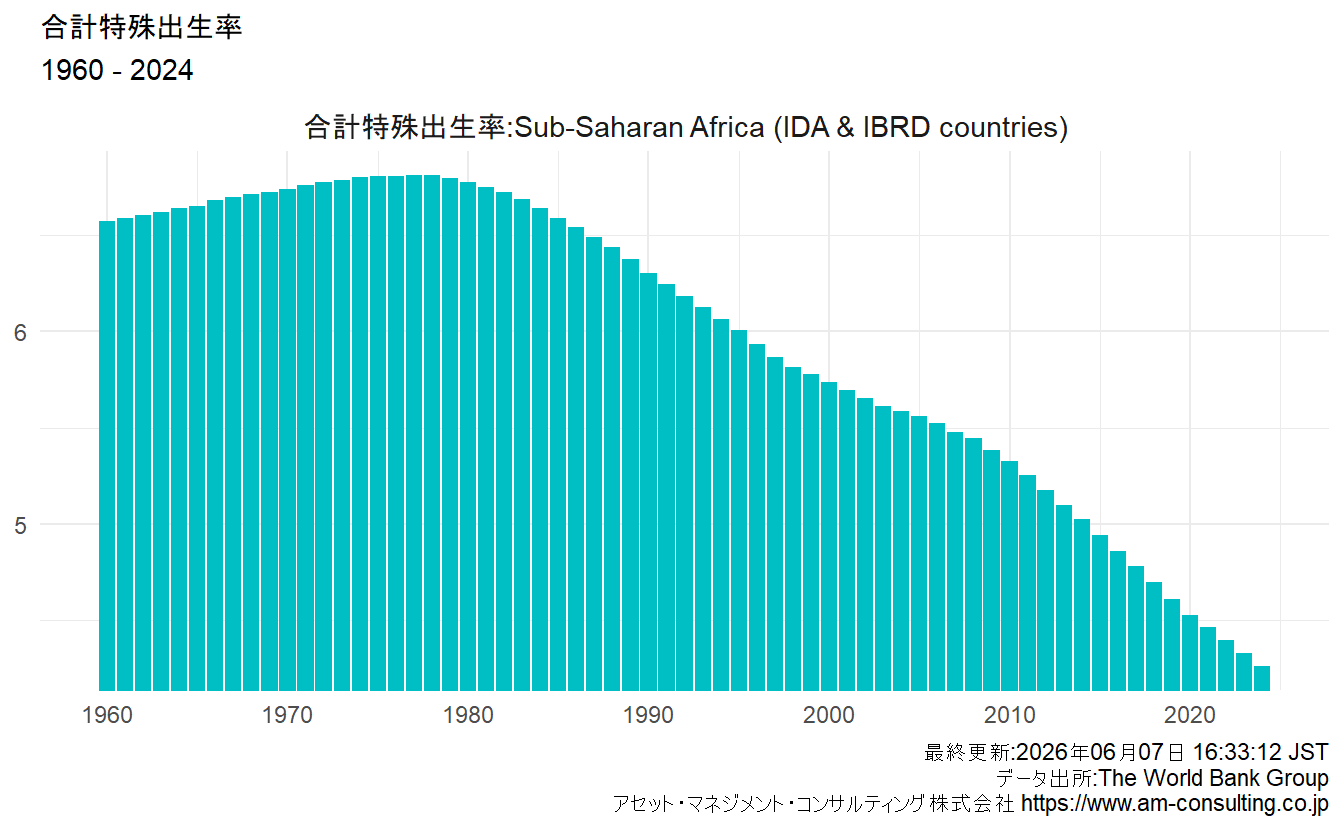
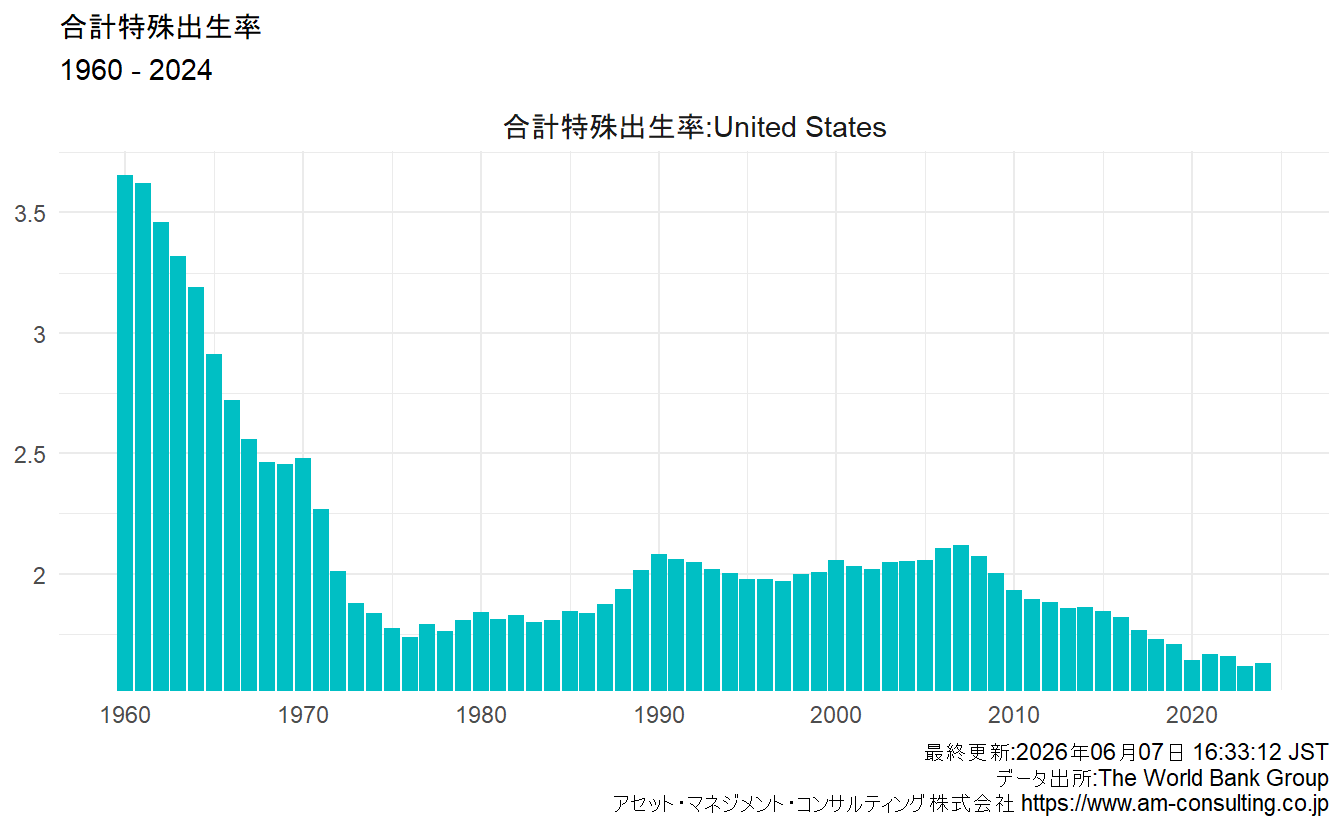
添付画像は各国、各地域の合計特殊出生率の時系列推移です。これだけ様々な特徴の異なる国、地域にも関わらず共通して合計特殊出生率は低下傾向にあります。つまり、人類とは「そういうもの」であり、「人類に出生率を上げろ」と望むのは「象に空を飛べ」と望んでいるのと同じなのです。東京都は婚活ア… https://t.co/k3jxHY1qgb pic.twitter.com/24ATkk1d3U
— 三竹 道雄/MITAKE Michio (@amc_corporation) January 20, 2026
2 合計特殊出生率の国際比較
- Fertility rate, total (births per woman)
- Member Countries
2.1 時系列テーブル
国名2.2 時系列チャート
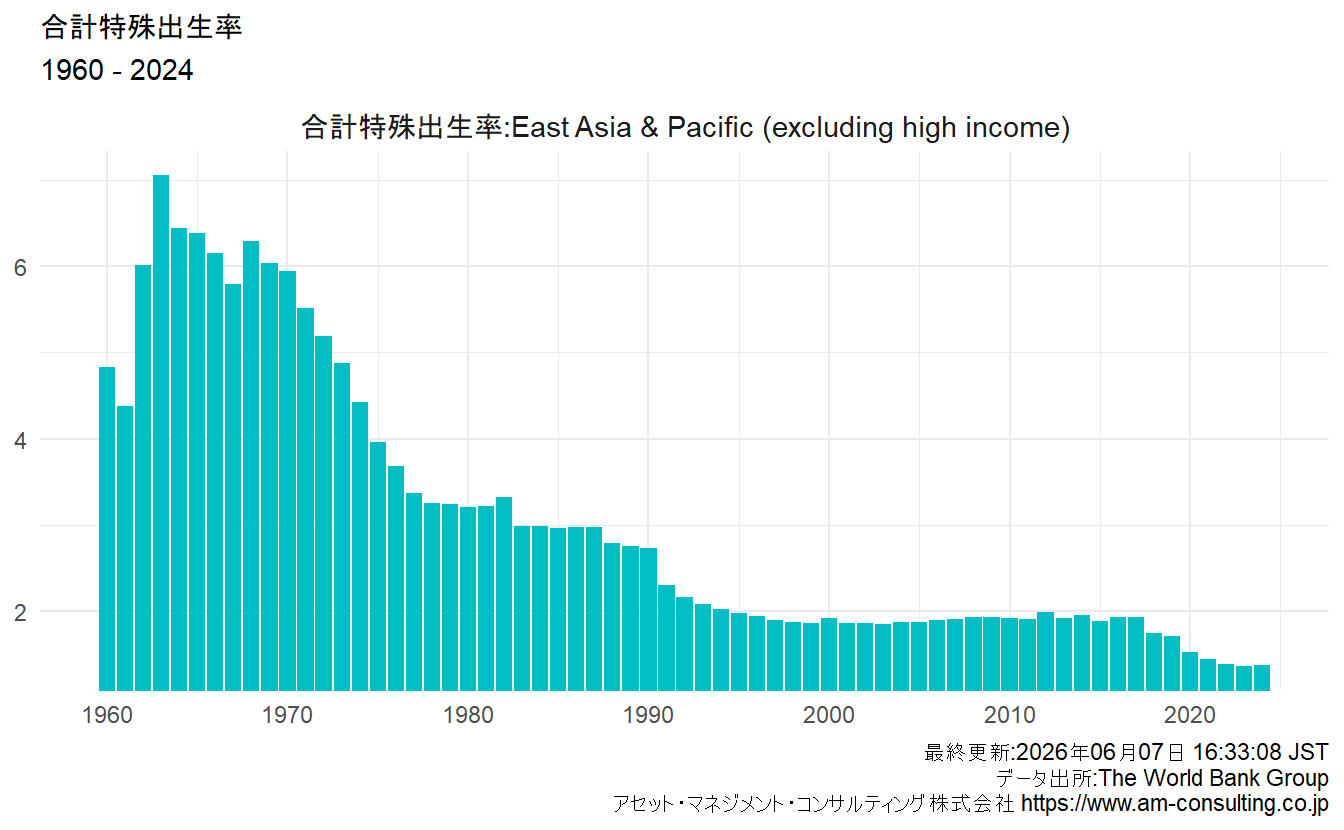
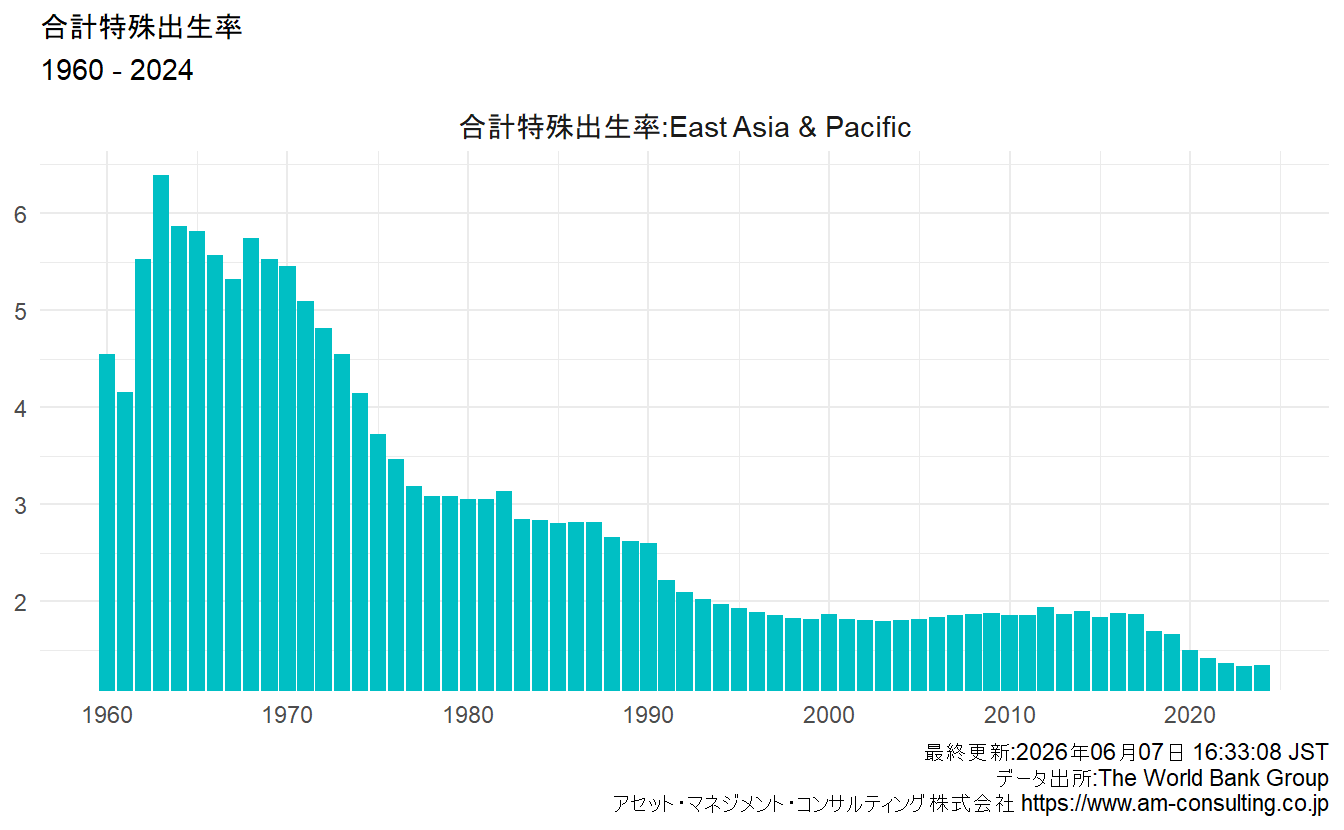
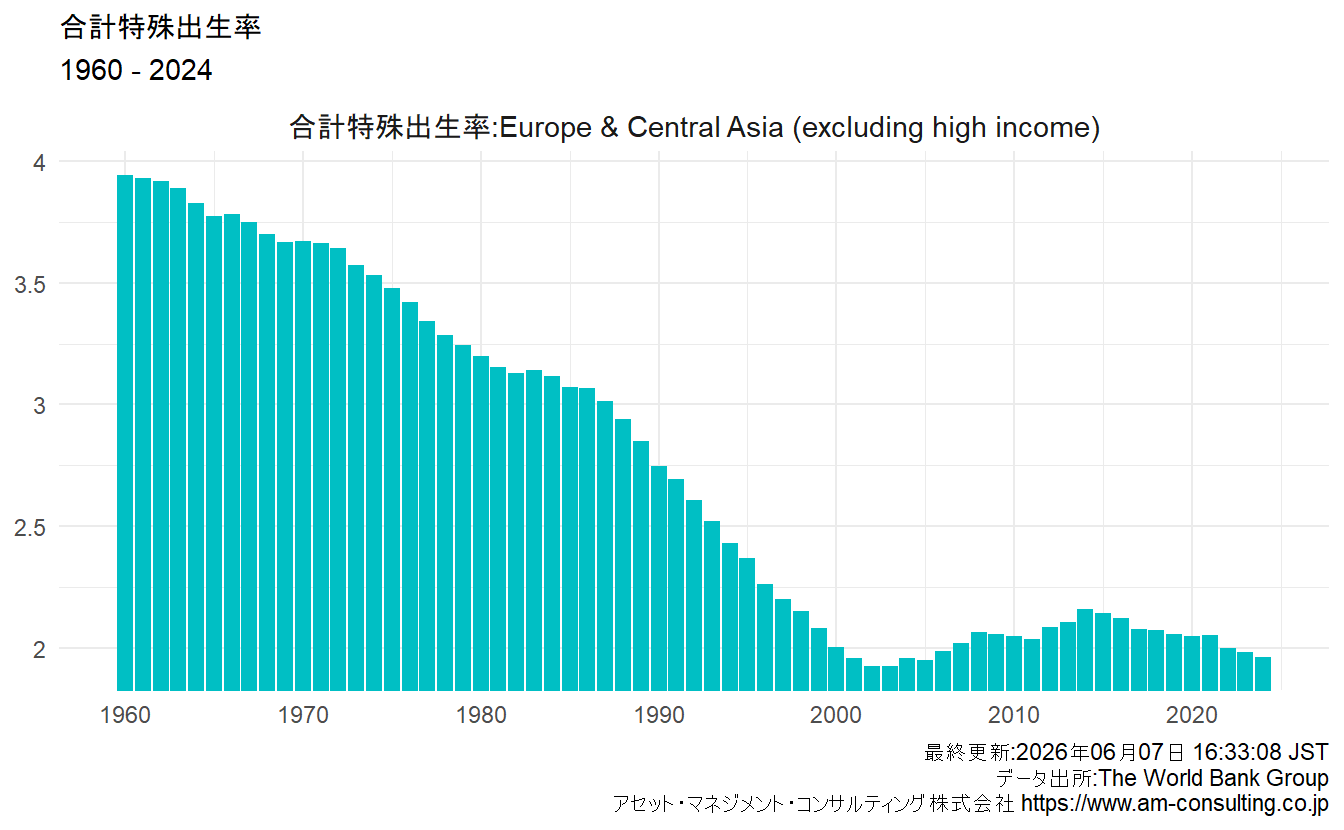
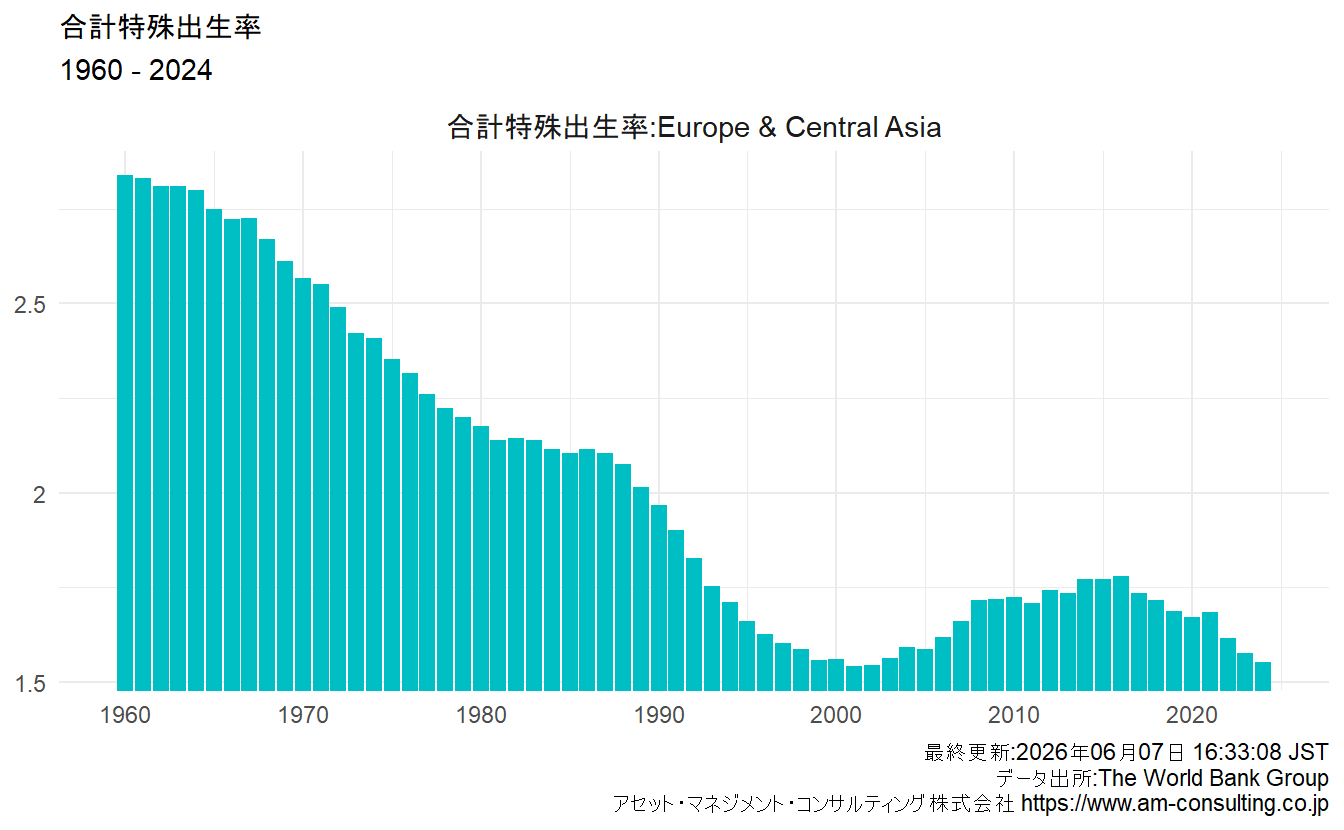
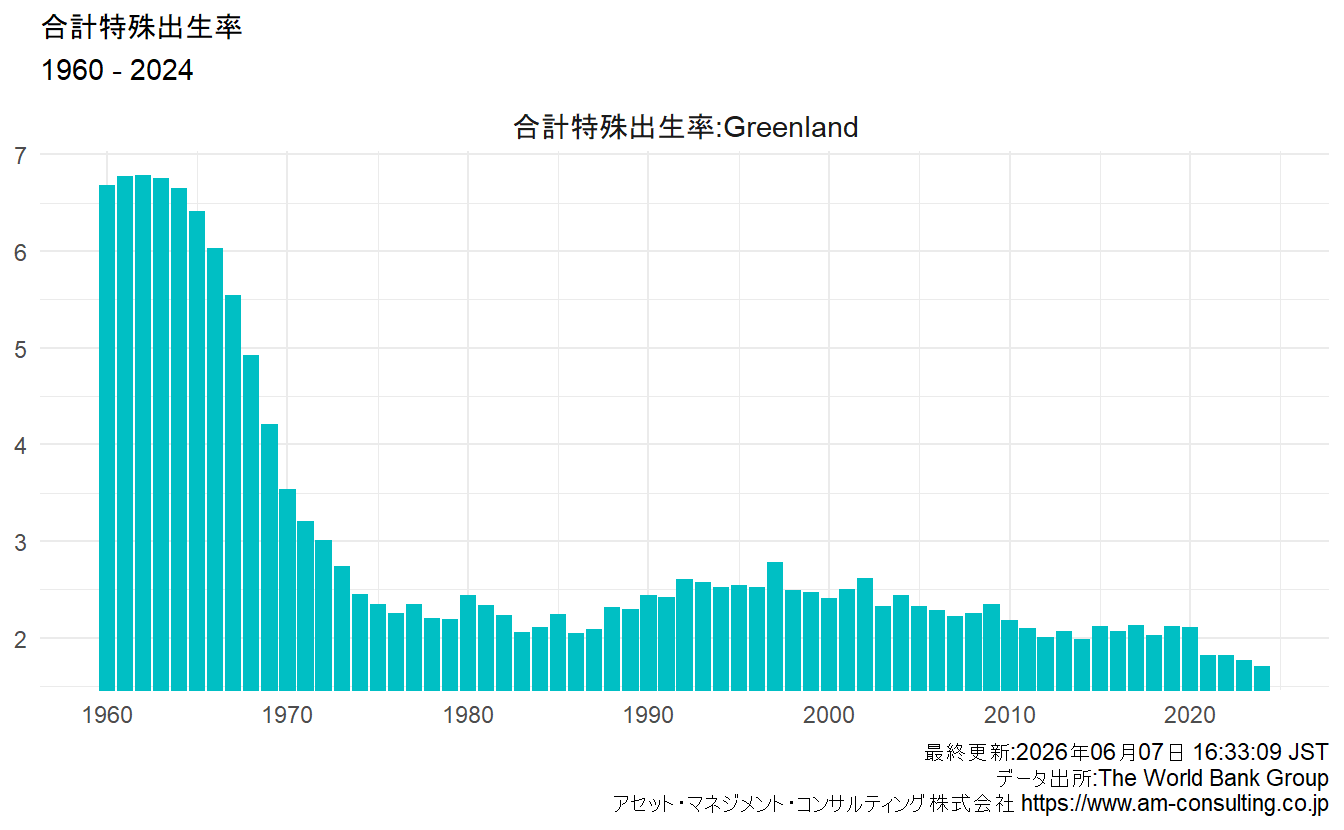
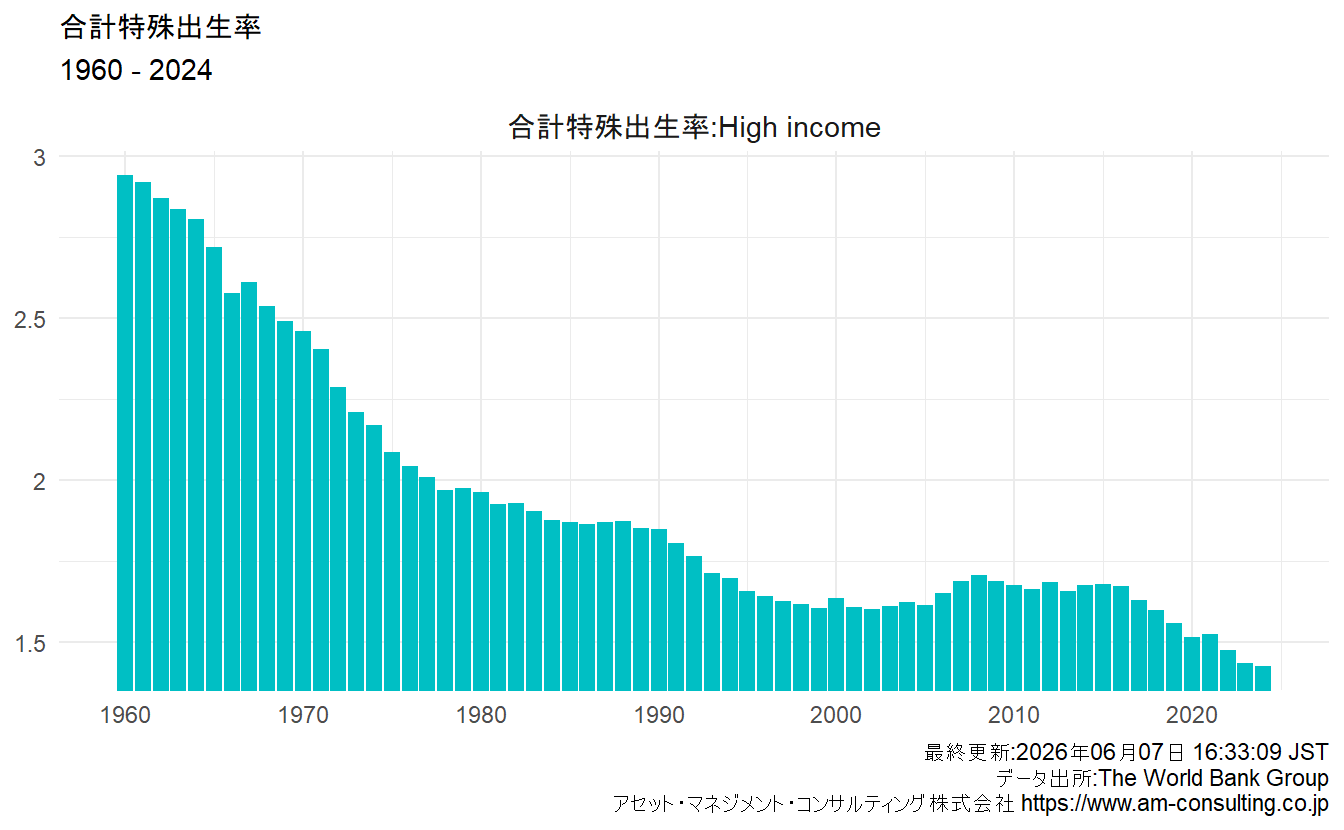
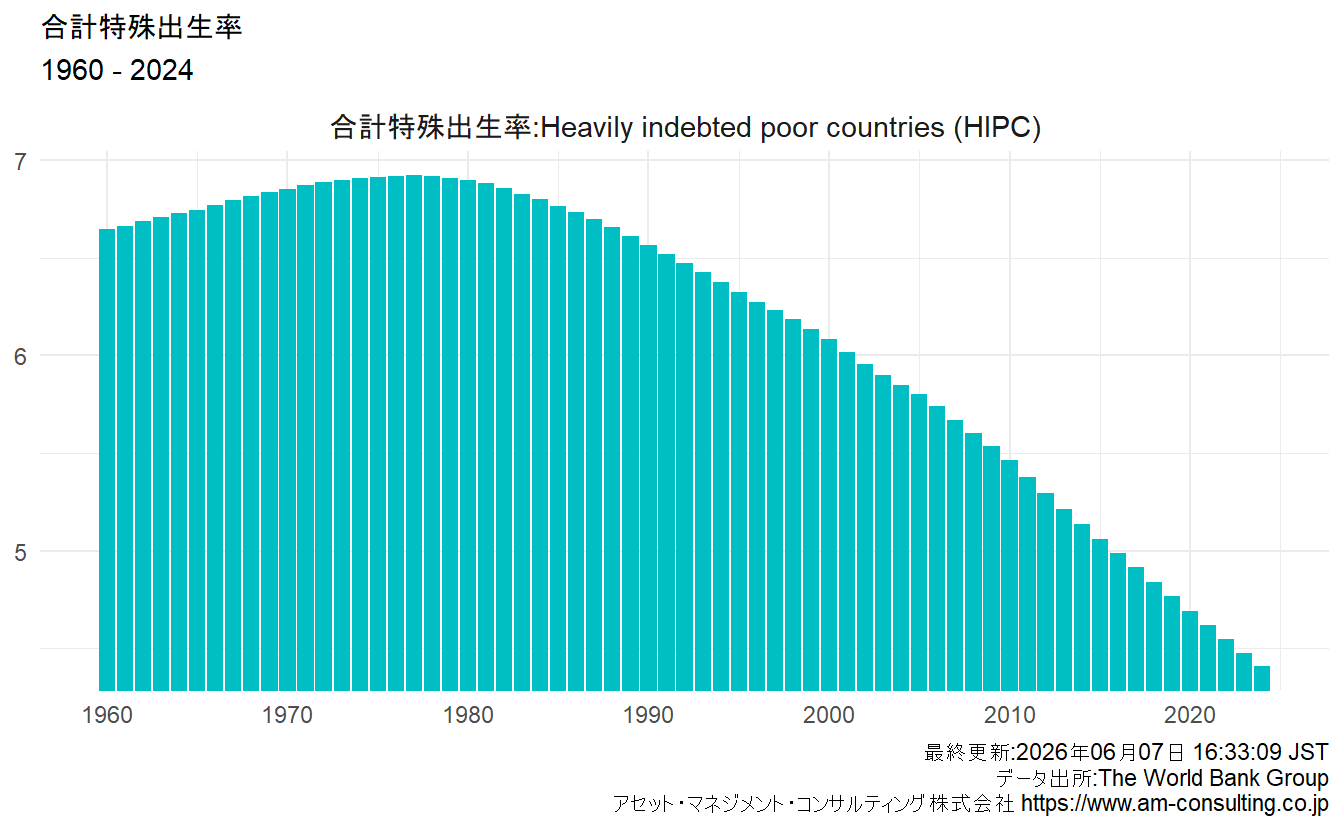
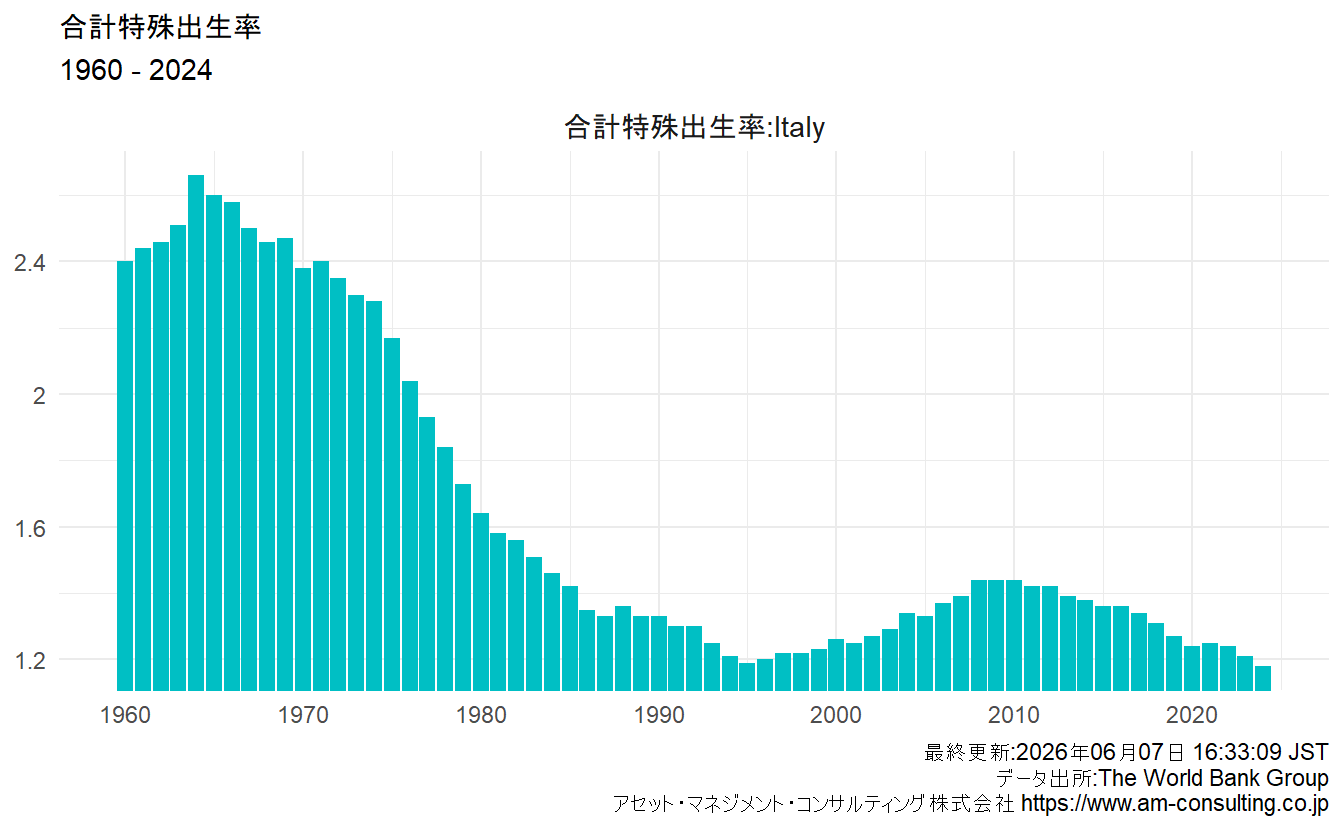
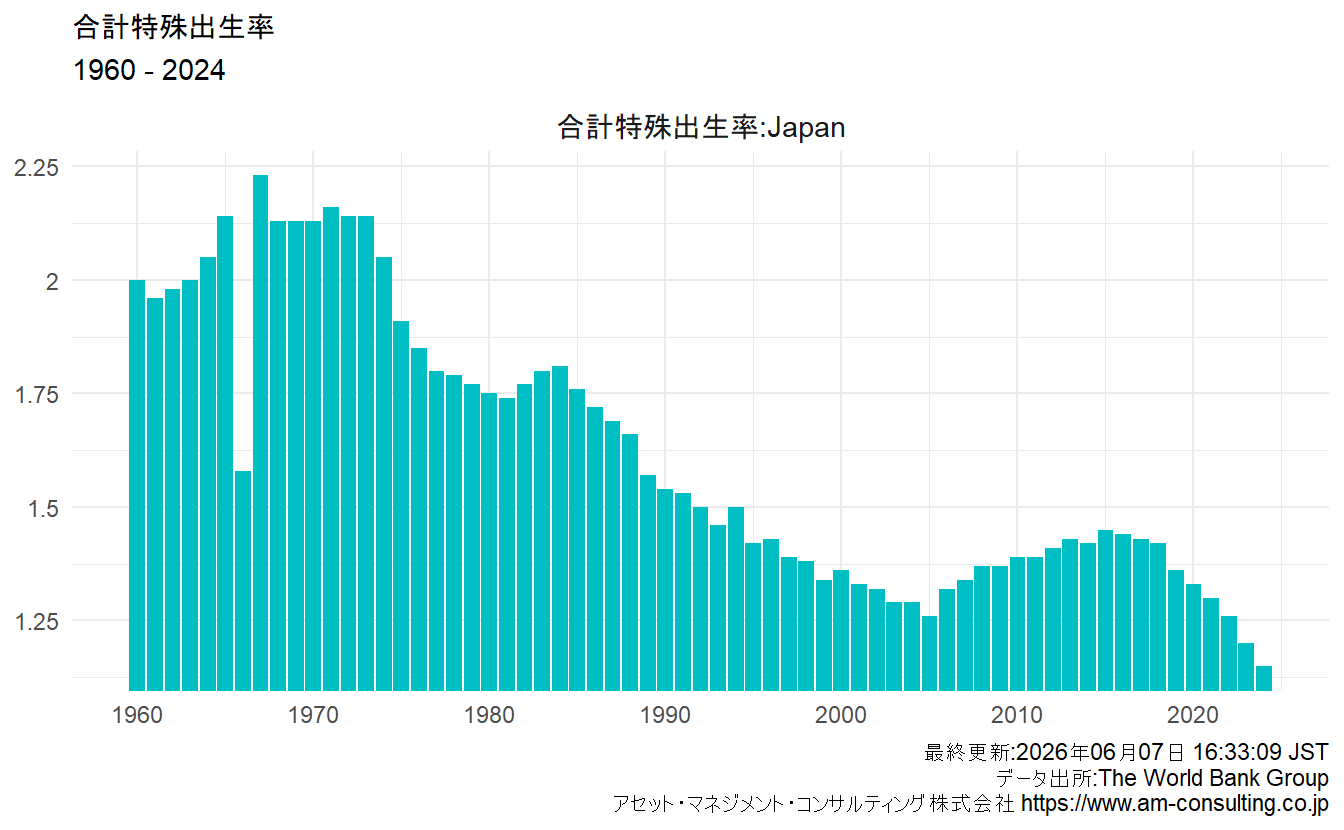
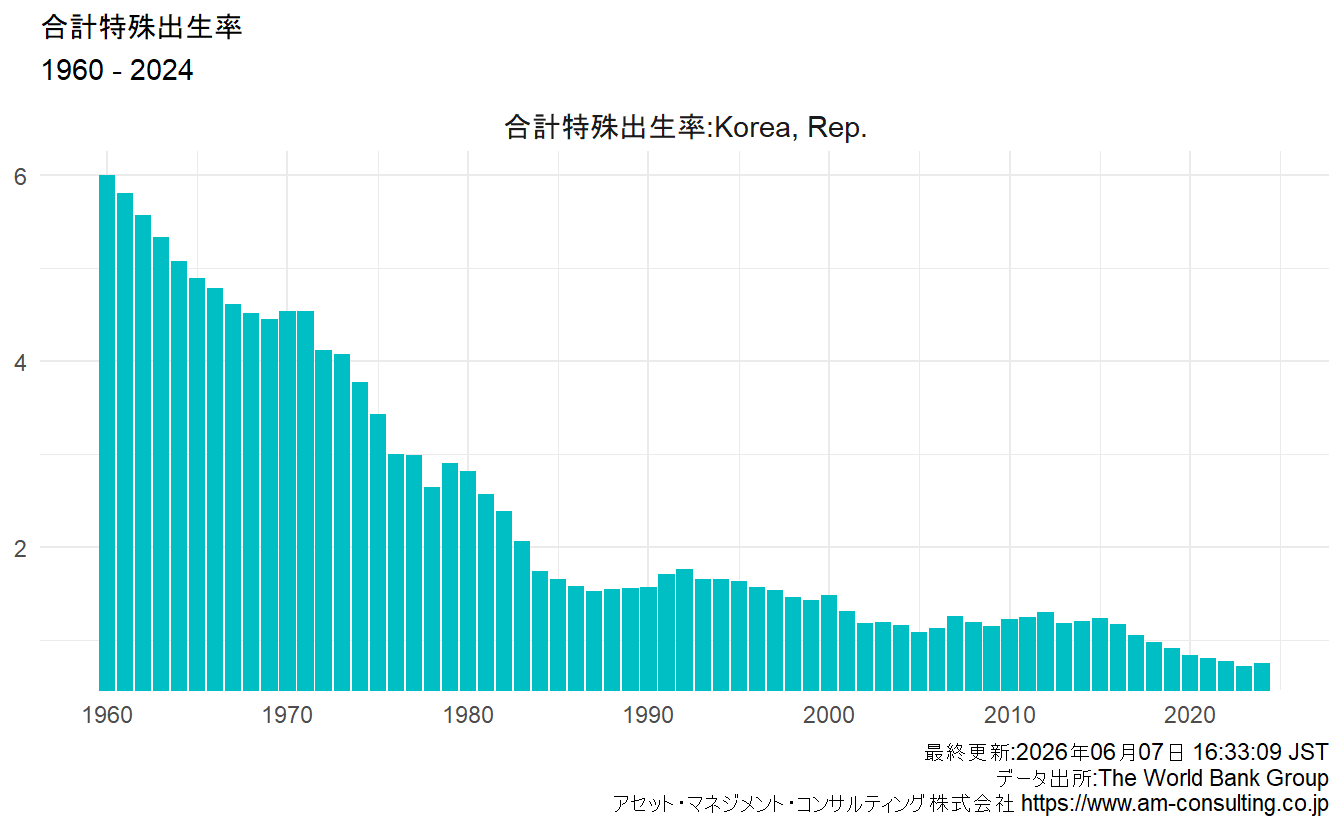
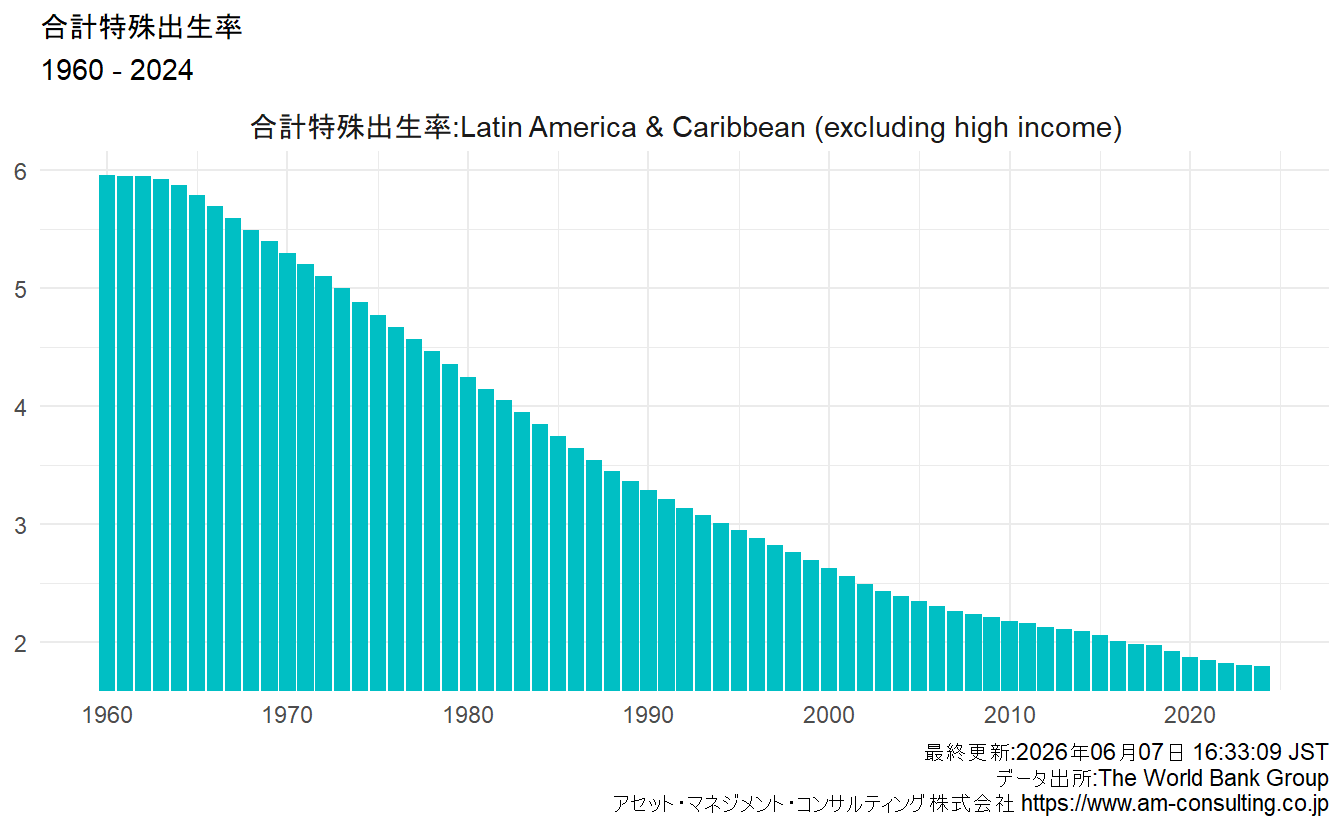
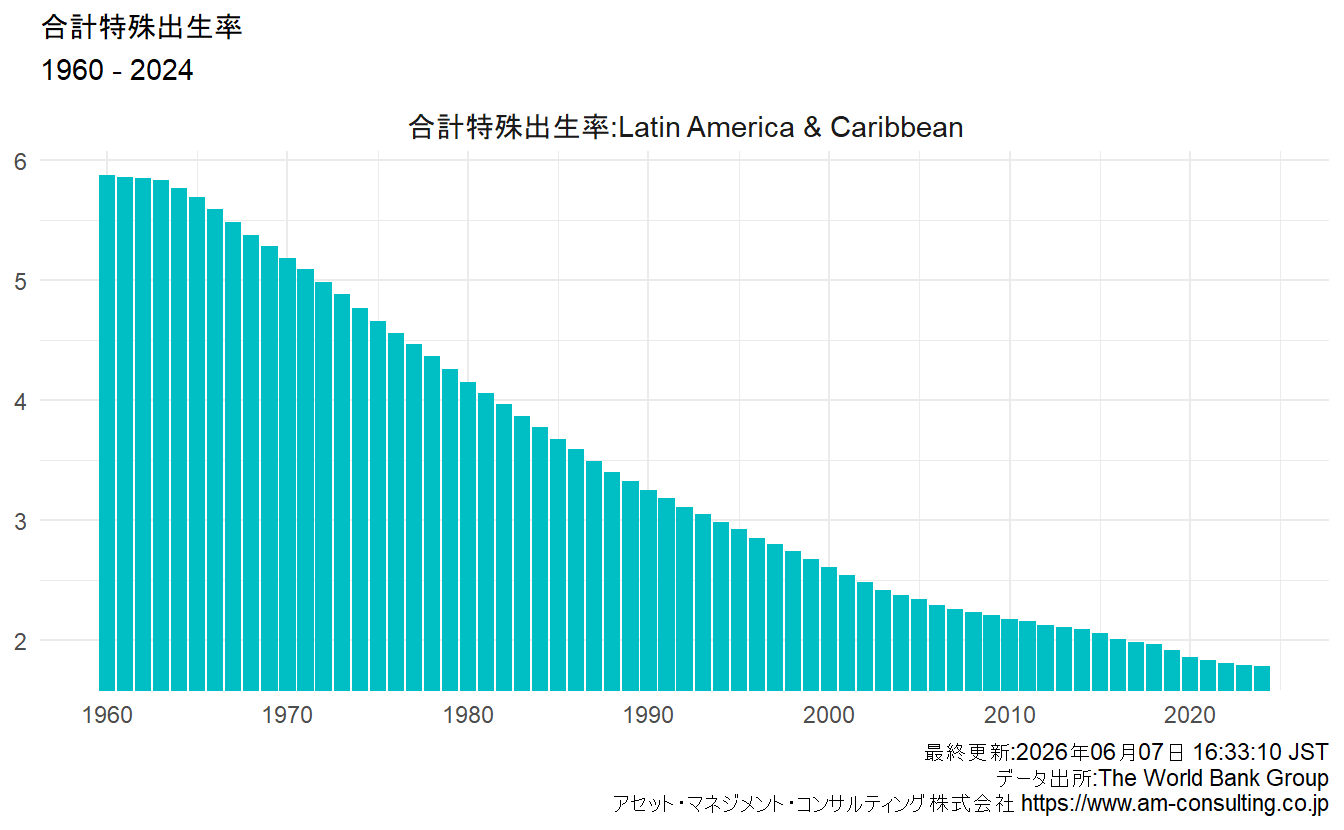
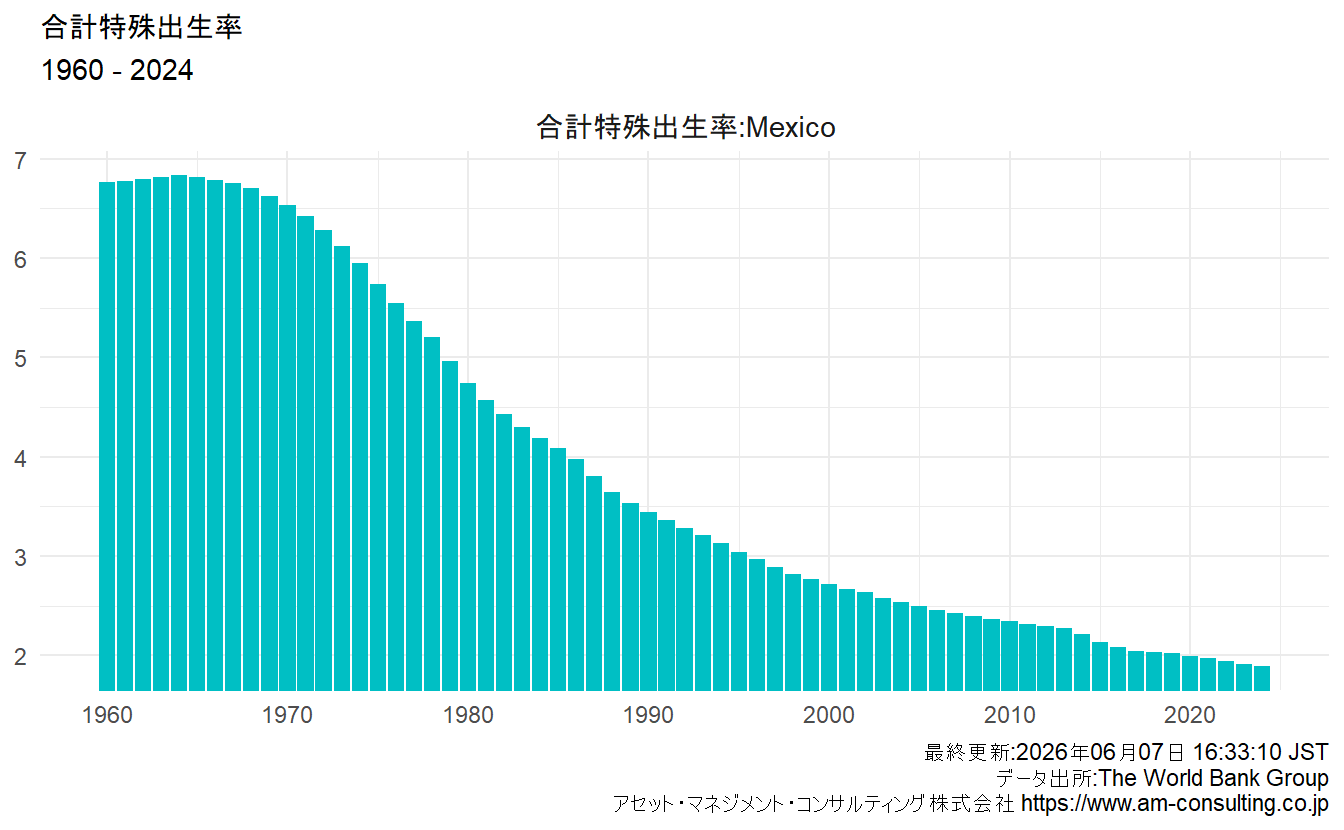
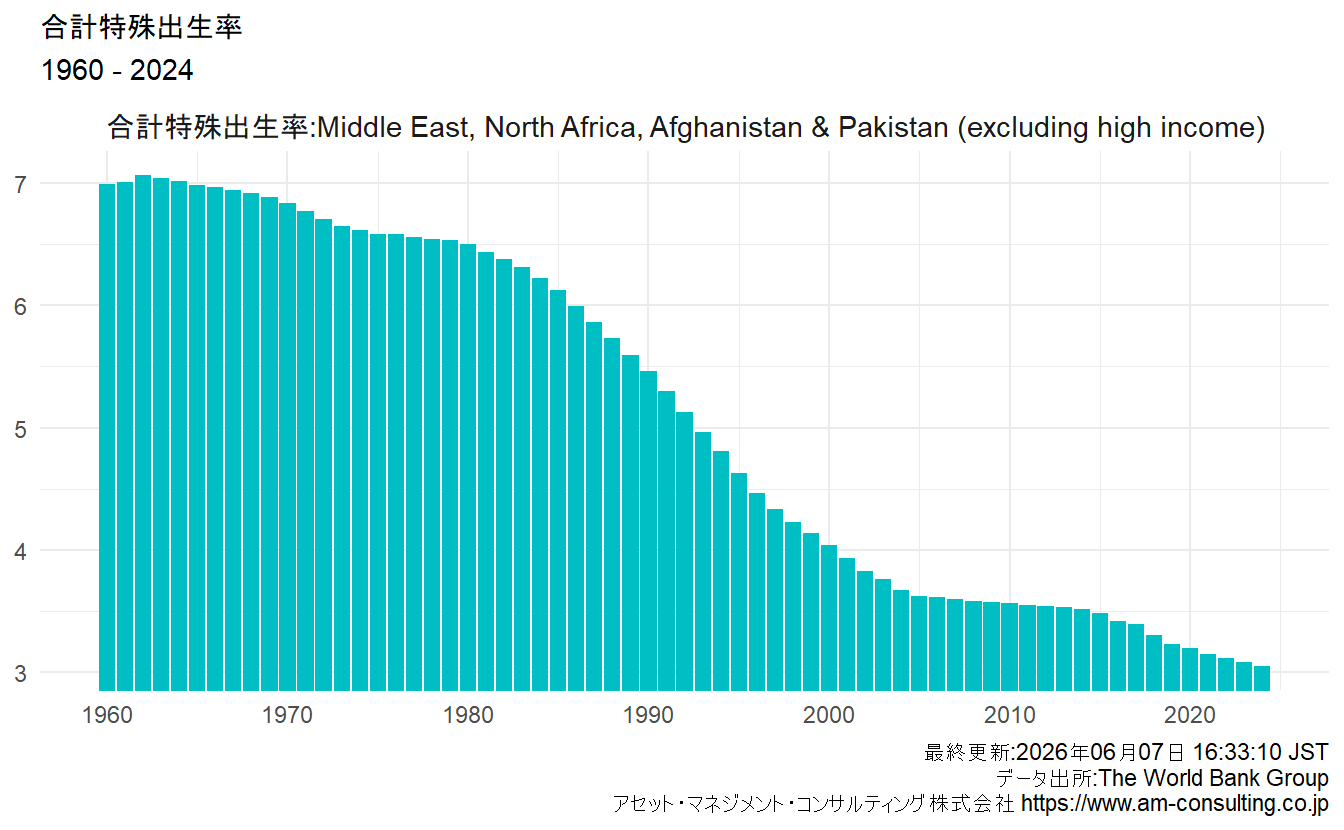
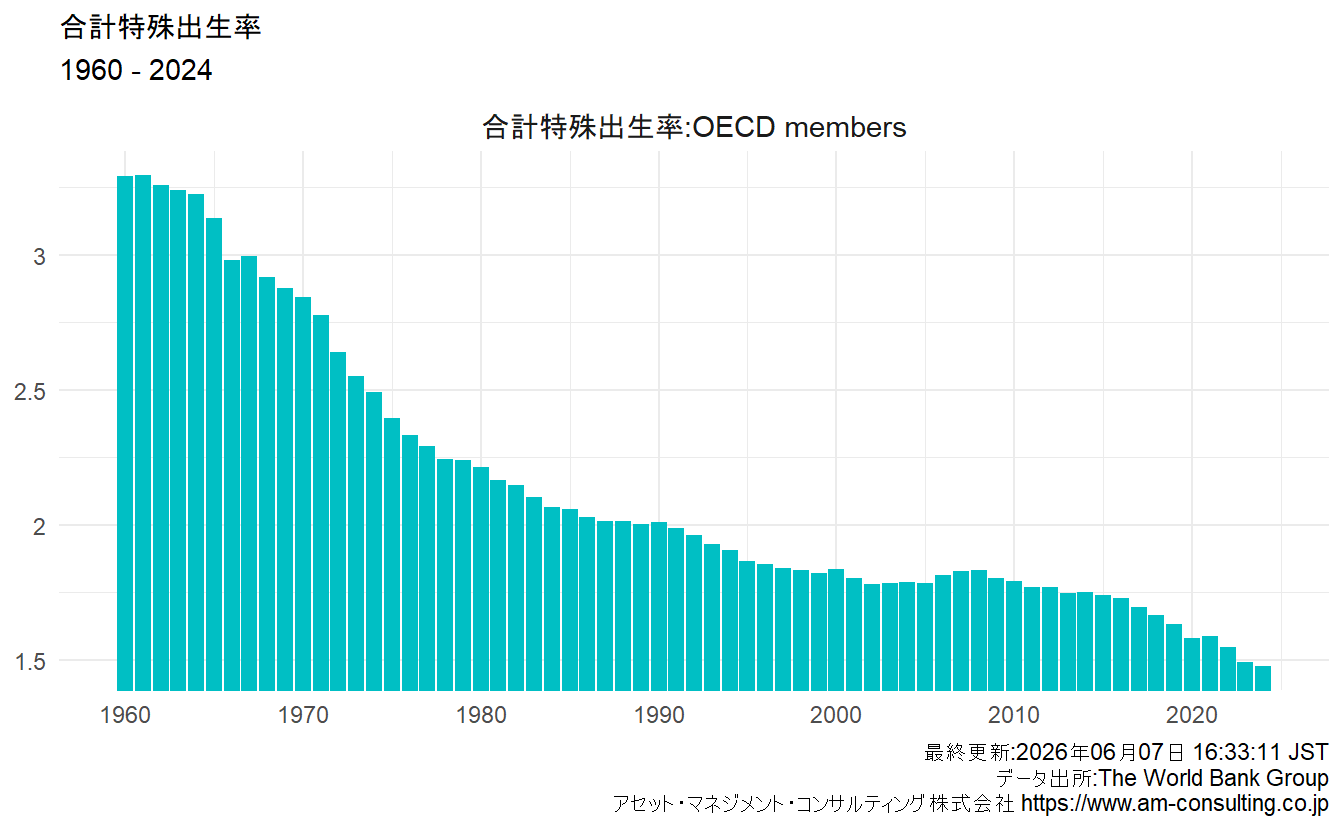
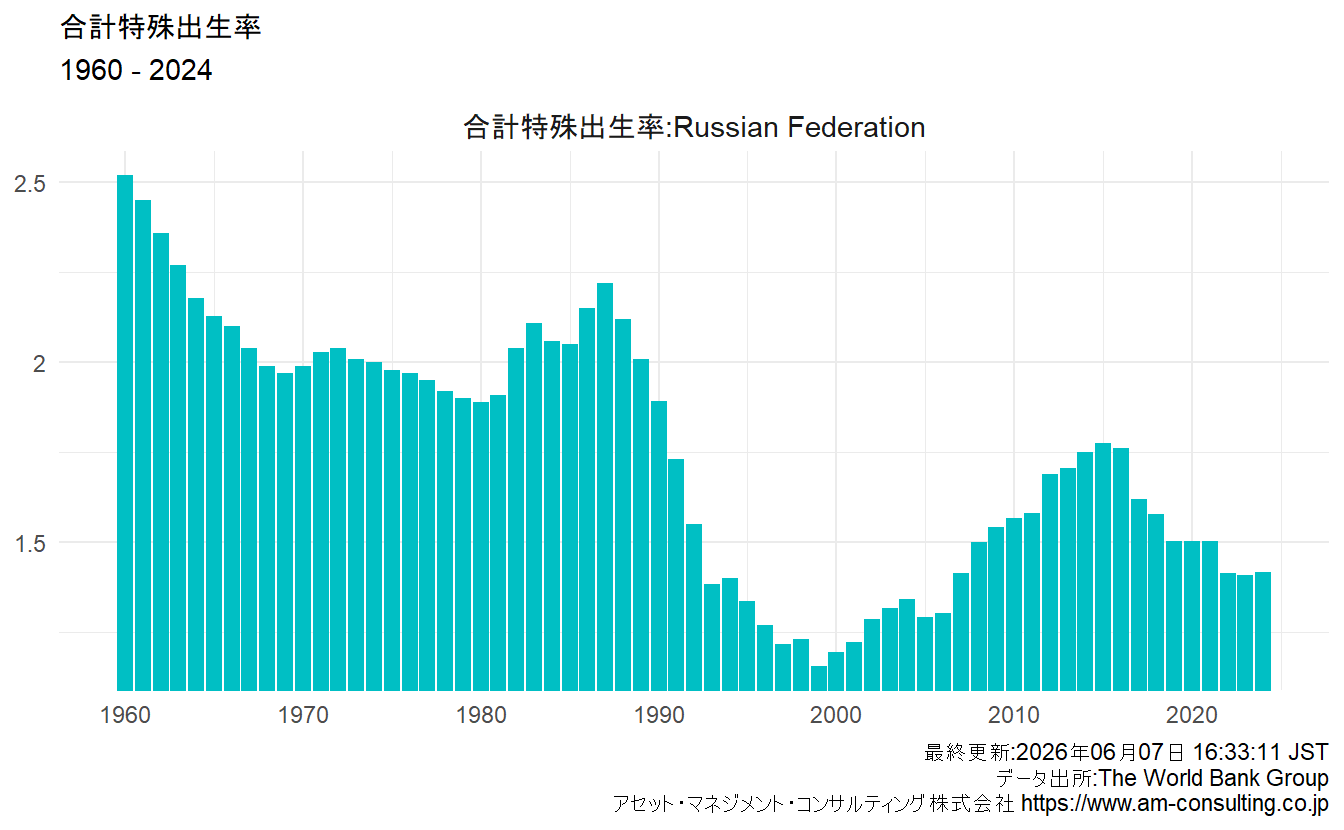
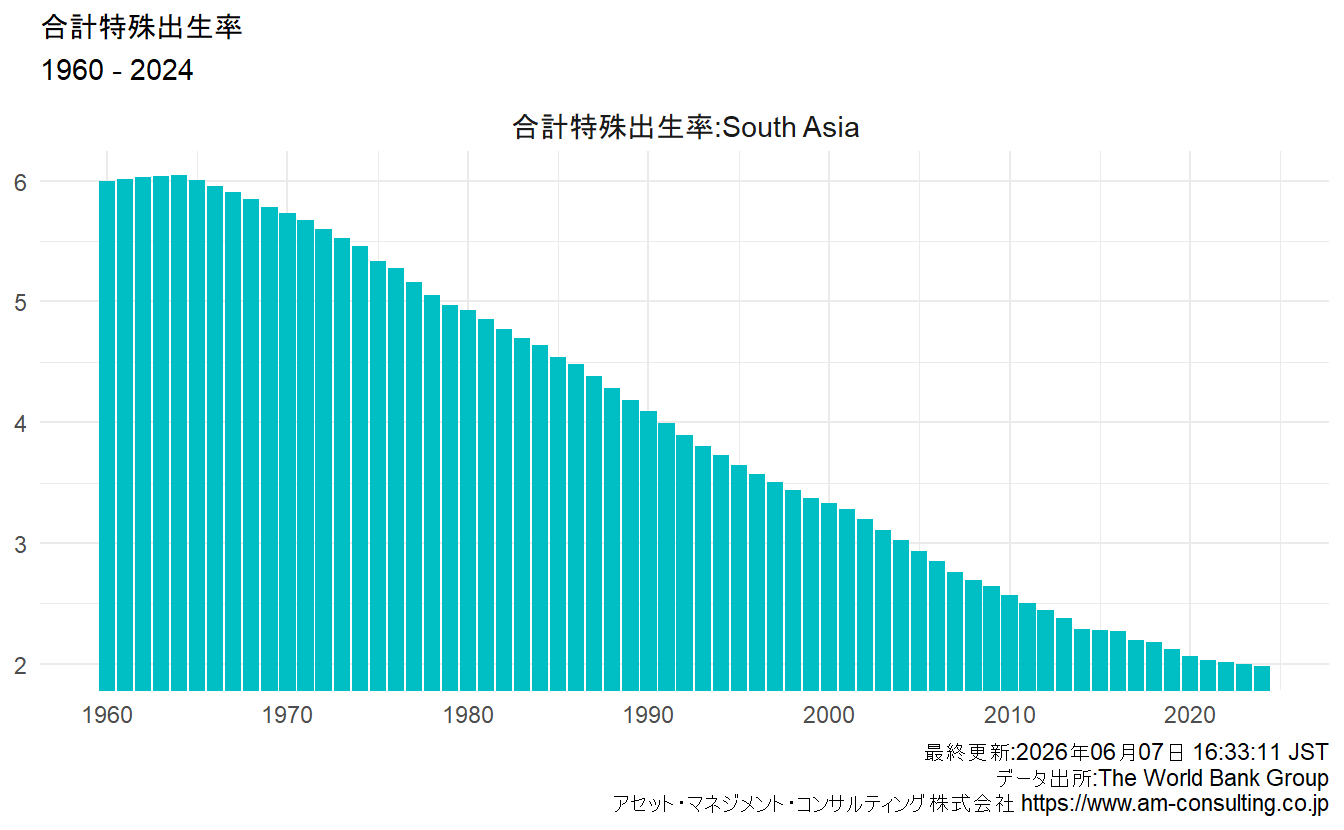
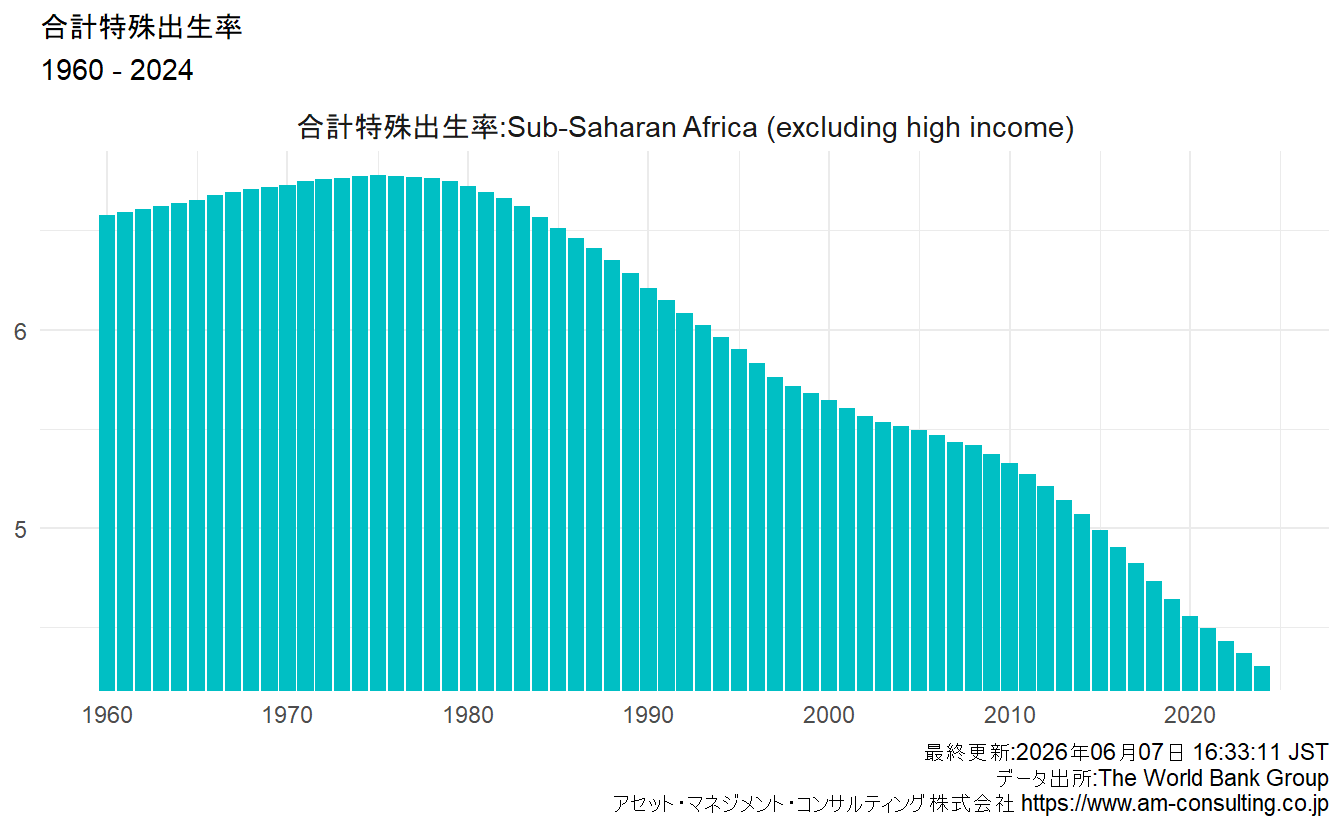
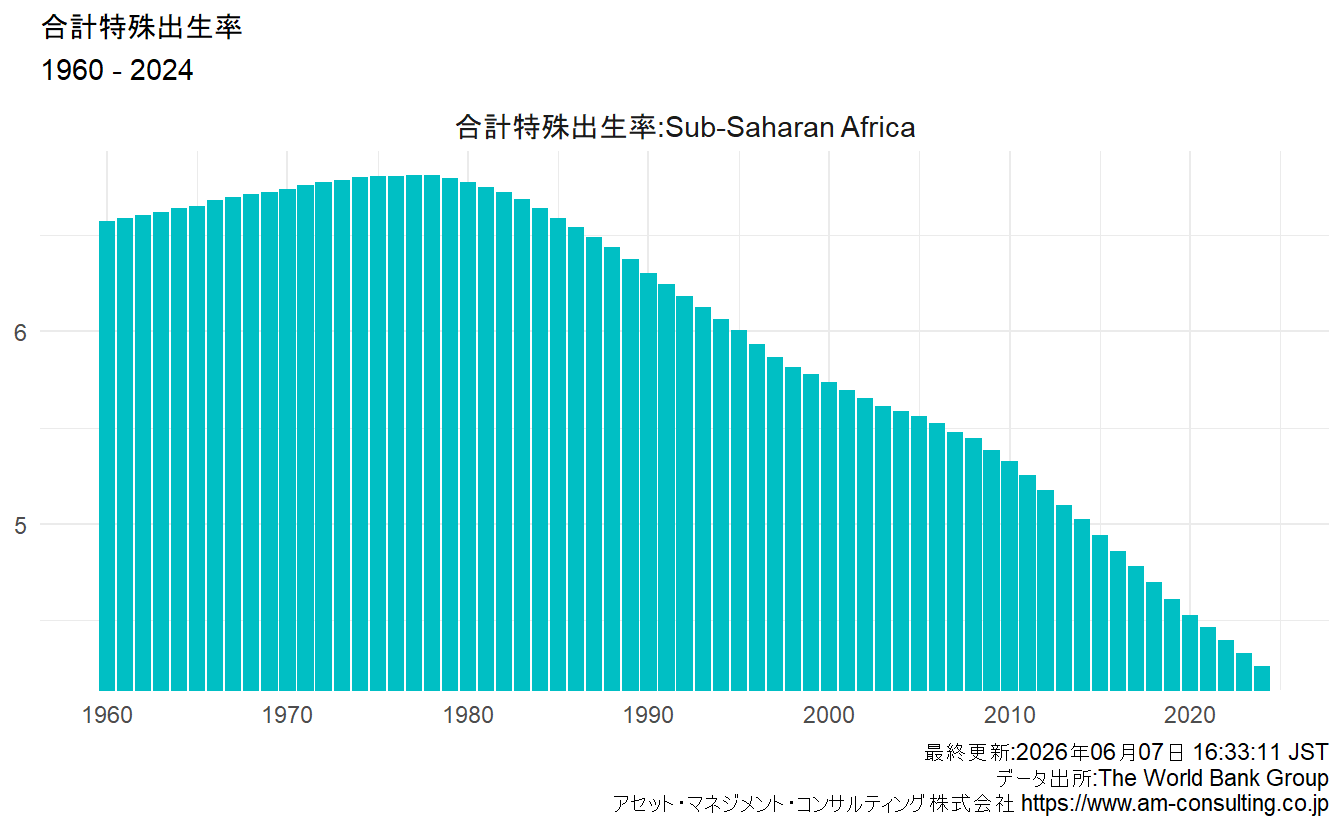
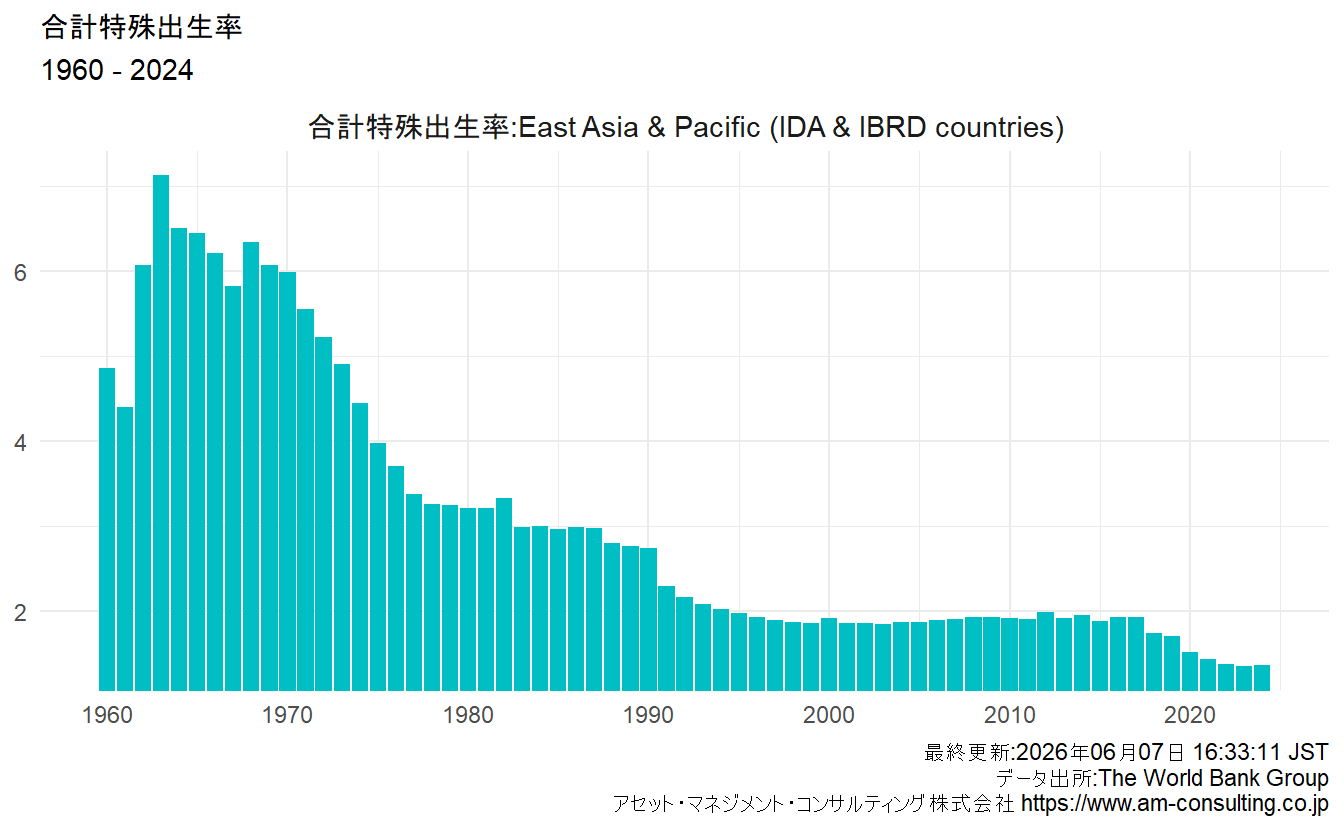
合計特殊出生率:Africa Eastern and Southern , 合計特殊出生率:Africa Western and Central , 合計特殊出生率:Australia , 合計特殊出生率:Brazil , 合計特殊出生率:Canada , 合計特殊出生率:Central Europe and the Baltics , 合計特殊出生率:China , 合計特殊出生率:Germany , 合計特殊出生率:East Asia & Pacific (excluding high income) , 合計特殊出生率:East Asia & Pacific , 合計特殊出生率:Europe & Central Asia (excluding high income) , 合計特殊出生率:Europe & Central Asia , 合計特殊出生率:Spain , 合計特殊出生率:European Union , 合計特殊出生率:France , 合計特殊出生率:United Kingdom , 合計特殊出生率:Greenland , 合計特殊出生率:High income , 合計特殊出生率:Heavily indebted poor countries (HIPC) , 合計特殊出生率:Italy , 合計特殊出生率:Japan , 合計特殊出生率:Korea, Rep. , 合計特殊出生率:Latin America & Caribbean (excluding high income) , 合計特殊出生率:Latin America & Caribbean , 合計特殊出生率:Low income , 合計特殊出生率:Lower middle income , 合計特殊出生率:Low & middle income , 合計特殊出生率:Middle East, North Africa, Afghanistan & Pakistan , 合計特殊出生率:Mexico , 合計特殊出生率:Middle East, North Africa, Afghanistan & Pakistan (excluding high income) , 合計特殊出生率:OECD members , 合計特殊出生率:Russian Federation , 合計特殊出生率:South Asia , 合計特殊出生率:Sub-Saharan Africa (excluding high income) , 合計特殊出生率:Sub-Saharan Africa , 合計特殊出生率:East Asia & Pacific (IDA & IBRD countries) , 合計特殊出生率:Europe & Central Asia (IDA & IBRD countries) , 合計特殊出生率:Latin America & the Caribbean (IDA & IBRD countries) , 合計特殊出生率:Middle East, North Africa, Afghanistan & Pakistan (IDA & IBRD) , 合計特殊出生率:South Asia (IDA & IBRD) , 合計特殊出生率:Sub-Saharan Africa (IDA & IBRD countries) , 合計特殊出生率:United States
3 合計特殊出生率の定義
出典 : https://databank.worldbank.org/metadataglossary/millennium-development-goals/series/SP.DYN.TFRT.IN
- 合計特殊出生率は「15~49歳までの女性の年齢別出生率を合計したもの」で、次の2つの種類があり、一人の女性がその年齢別出生率で一生の間に生むとしたときの子どもの数に相当する。
- A 「期間」合計特殊出生率 - ある期間(1年間)の出生状況に着目したもので、その年における各年齢(15~49歳)の女性の出生率を合計したもの。 - 女性人口の年齢構成の違いを除いた「その年の出生率」であり、年次比較、国際比較、地域比較に用いられている。
- B 「コーホート」合計特殊出生率 - ある世代の出生状況に着目したもので、同一世代生まれ(コーホート)の女性の各年齢(15~49歳)の出生率を過去から積み上げたもの。 - 「その世代の出生率」である。
- 実際に「一人の女性が一生の間に生む子どもの数」はBのコーホート合計特殊出生率であるが、この値はその世代が50歳に到達するまで得られないため、それに相当するものとしてAの期間合計特殊出生率が一般に用いられている。 なお、各年齢別の出生率が世代(コーホート)によらず同じであれば、この二つの「合計特殊出生率」は同じ値になる。
- ただし、晩婚化・晩産化が進行している状況等、各世代の結婚や出産の行動に違いがあり、各年齢の出生率が世代により異なる場合には、別々の世代の年齢別出生率の合計であるAの期間合計特殊出生率は、同一世代のBのコーホート合計特殊出生率の値と異なることに注意が必要である。
出典 : https://www.mhlw.go.jp/toukei/saikin/hw/jinkou/geppo/nengai11/sankou01.html
4 データ出所
- The World Bank Group
5 公表頻度
- 年次
6 最終更新
Sys.time()[1] "2026-06-07 16:33:38 JST"7 R & Quarto
R.Version()$version.string[1] "R version 4.5.3 Patched (2026-03-11 r89773 ucrt)"quarto::quarto_version()[1] '1.9.38'